A roadside unit is not a traffic centre, and a project description is not a measurement. The pages below are easy to mix up because they describe the same historical project at different moments.
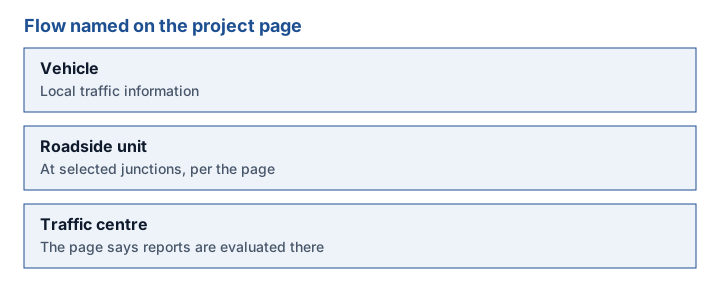
The Technical University of Munich project page says vehicles and roadside units exchange information, and that the roadside units connect to traffic centres, which evaluate reports and can send them back to affected vehicles. The page is written partly in the future tense about building a test area in the Frankfurt/Rhine-Main region. Read it as the project’s own description of the intended system, not as the later results account.
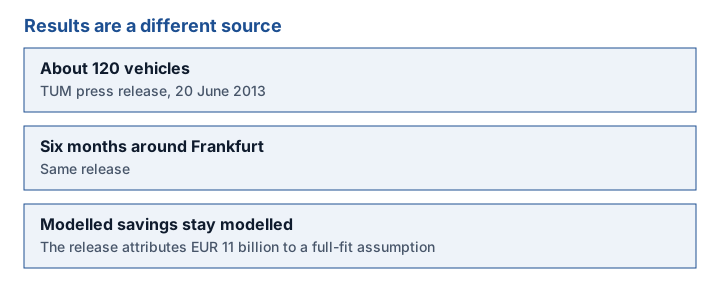
The university’s 20 June 2013 press release is the results account read for this site. It says the project sent around 120 vehicles onto highways, country roads and city streets in and around Frankfurt for six months, with 500 test drivers and almost one million miles (1.6 million kilometres), and more than four terabytes of data. It also says the consortium assumes potential savings of more than EUR 11 billion a year for the German economy, based on a simulation of all vehicles being equipped. That euro figure is a modelled assumption in the release, not an observed saving, and it is not a finding of this website.
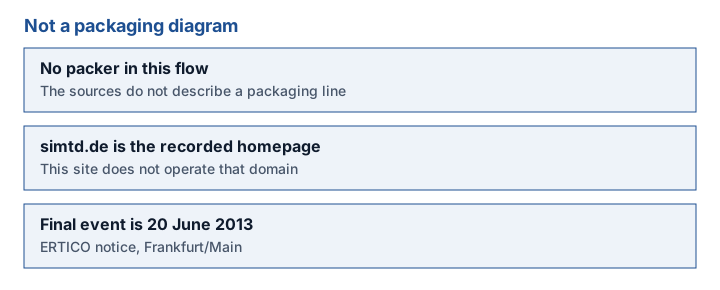
ERTICO’s 17 June 2013 notice says the final event was on 20 June 2013 in Frankfurt/Main. The project page records www.simtd.de as the project homepage. This website does not operate that domain. None of these sources describes a packaging machine. Packaging guides on this site are a new subject. See the historical overview and what V2X refers to. The section home is Connected Mobility.
Method and sources
The TUM project page, the 20 June 2013 TUM press release and the 17 June 2013 ERTICO notice were read on 14 October 2026. The 2013 factsheets PDF was not obtained, so it is not quoted.