
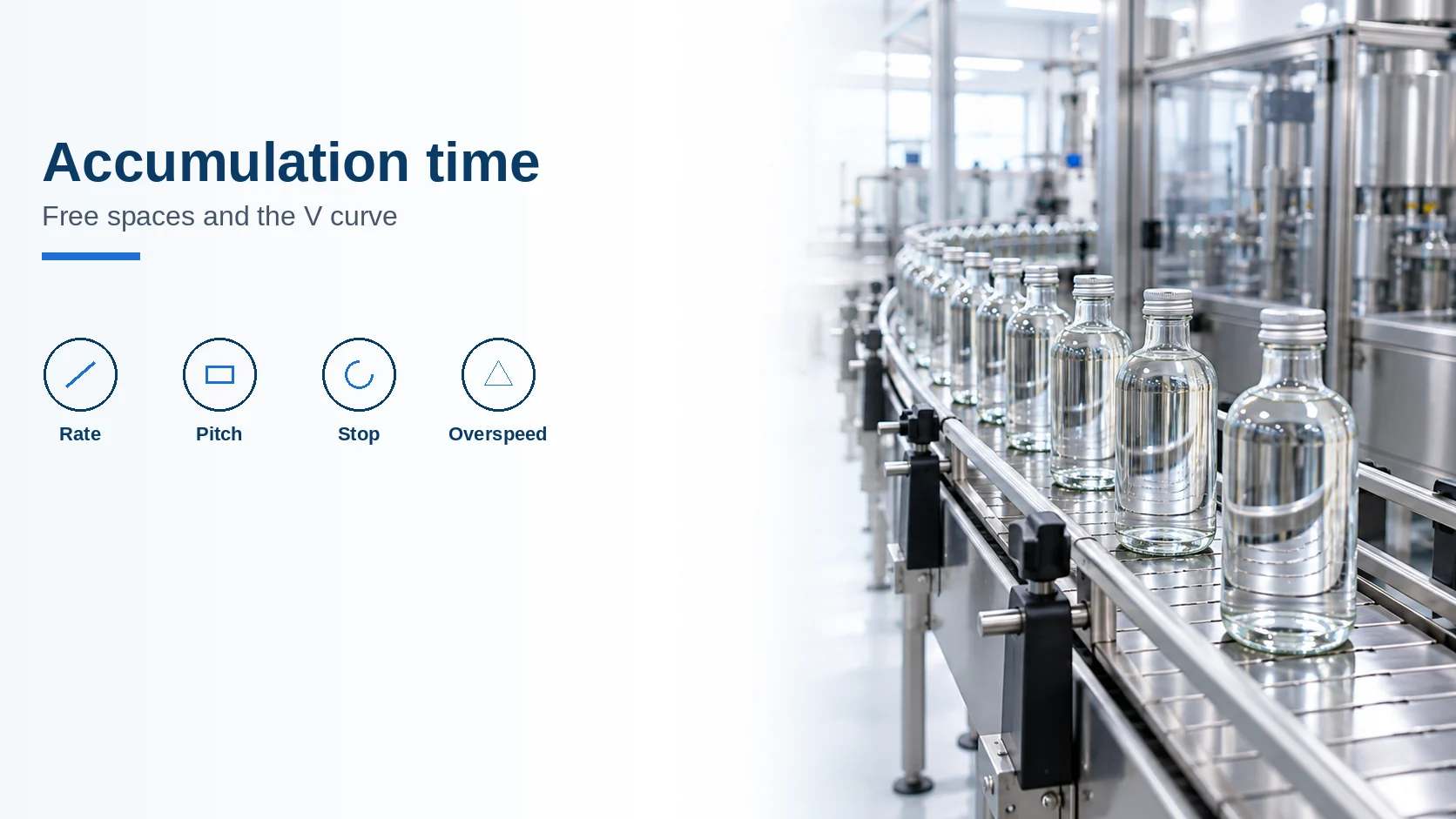
Conveyor accumulation time and buffer sizing
Turn a downstream stop into free conveyor spaces, then check whether V-curve overspeed can clear that queue before the next stop.
Home / Packaging Automation
These guides treat a packaging line as a chain of states, counts and handoffs. Match the machine and the price to the supplier documents for the station you are buying.
Guides in this section:Conveyor accumulation time and buffer sizing; OEE formula: availability, performance and quality; Palletizing machine: conventional vs robotic layout; Data to name at case and pallet handoffs; Line buffers and packaging handoffs; What to define before you collect OEE; How to read PackML machine states; Close the loop from print to reject; Verify the reject, not only the camera.
Turn a downstream stop into free conveyor spaces, then check whether V-curve overspeed can clear that queue before the next stop.
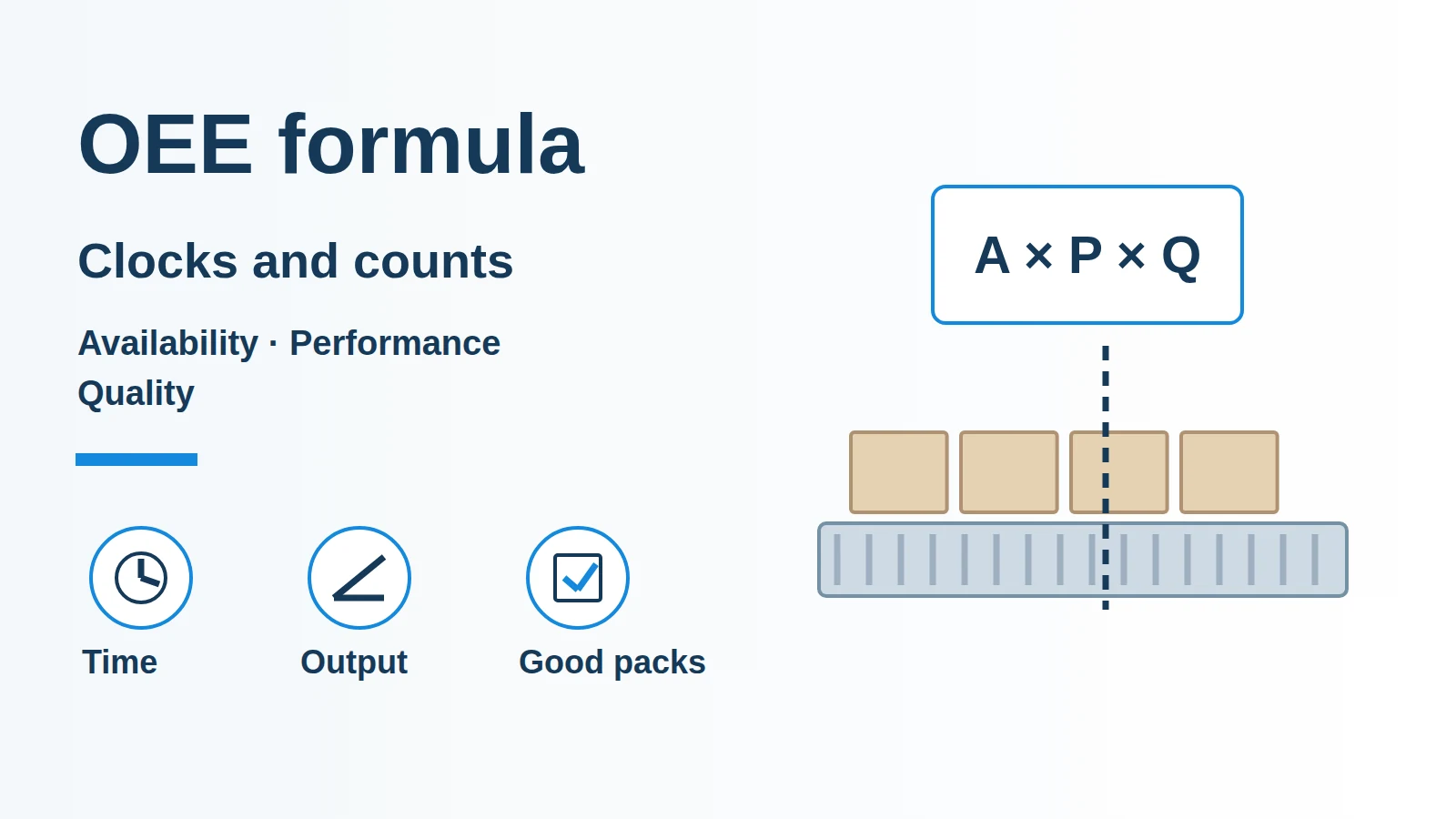
Reconstruct the OEE formula from its clocks and counts, map performance to ISO effectiveness, and keep a time ledger that explains the losses.
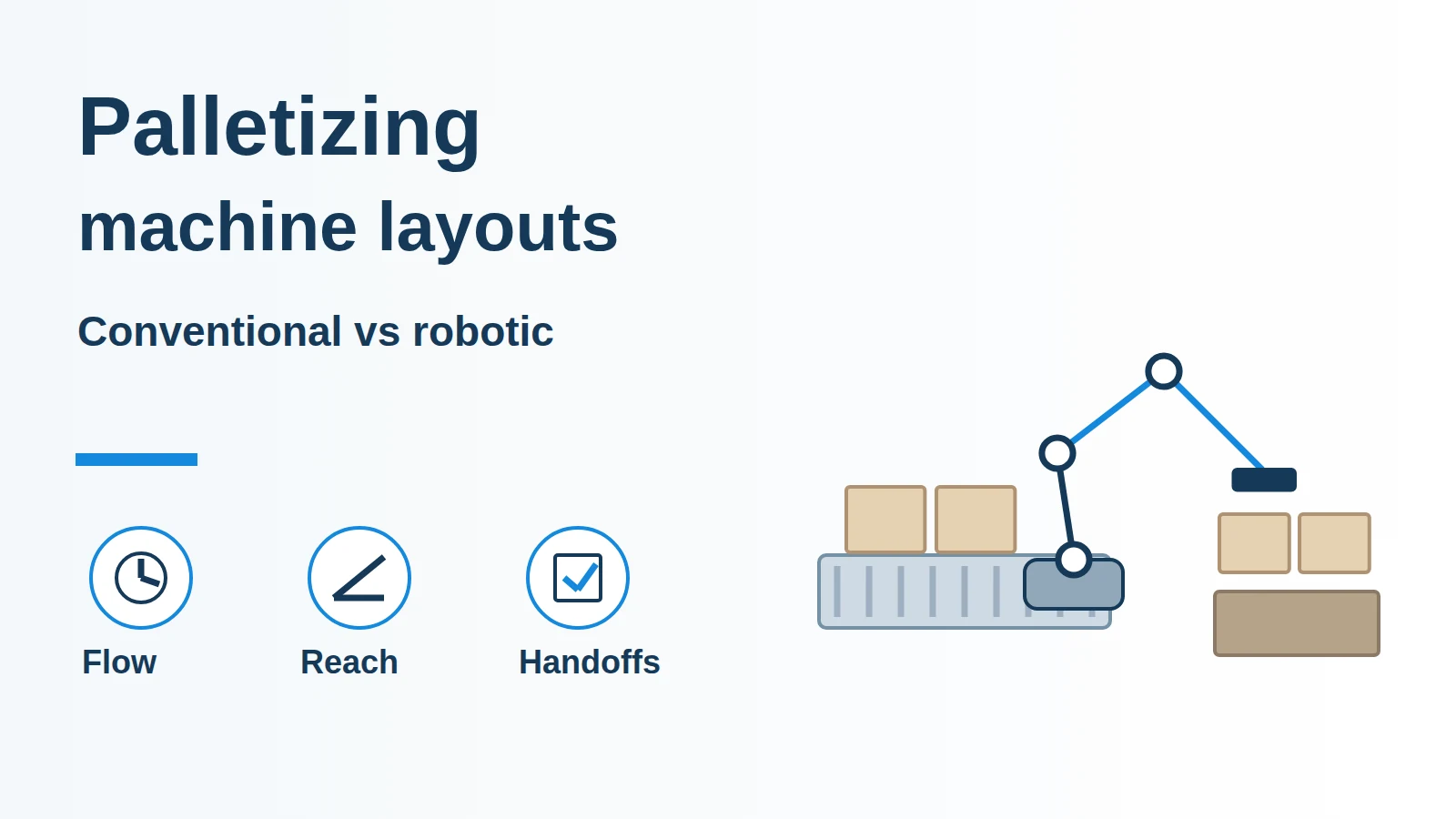
Compare conventional layer formation with robotic pick-and-place layouts, then check load height, reach, pallet exchange and the full handoff boundary.
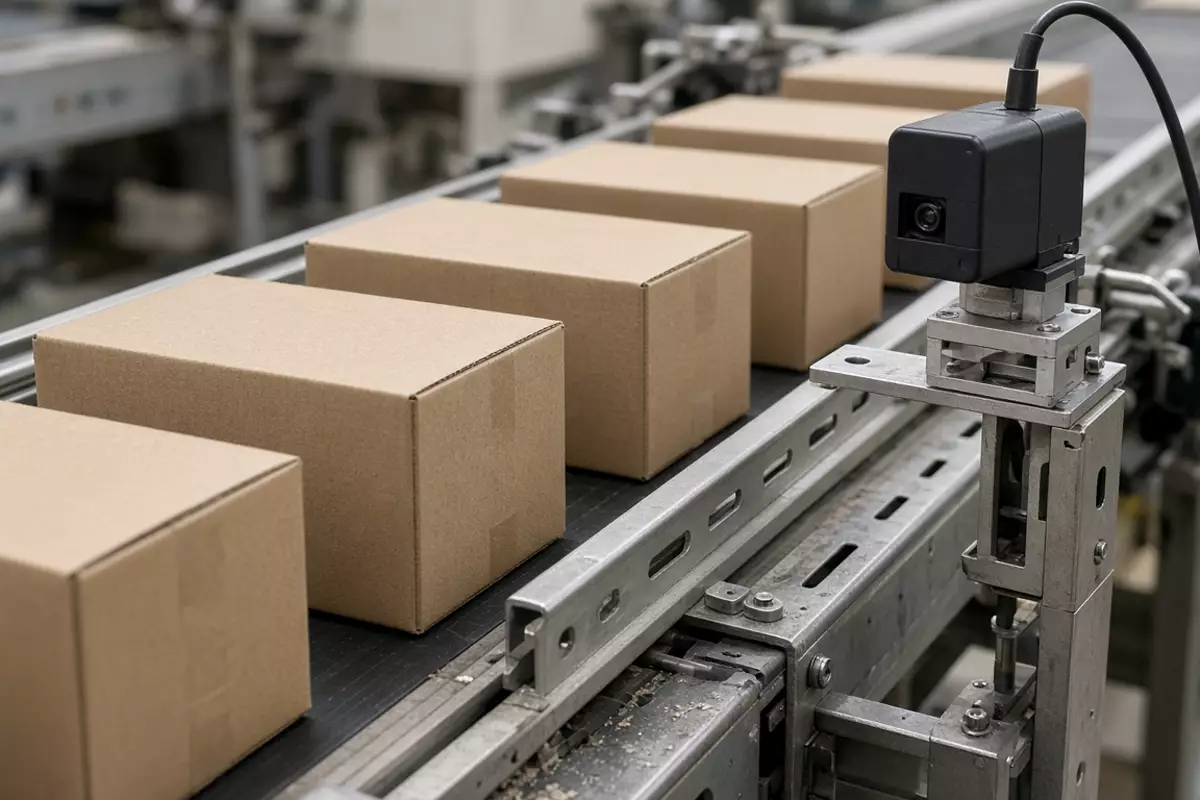
Case packing and palletizing need a complete signal, an identity for the case or pallet, and a blocked state. Match the machine to those signals on the documents for the station.
A machine's rated speed is not the line's rate. Buffers and handoff signals decide whether the next station can take the pack.
OEE is only as clear as the clocks and counts behind it. Name planned time, stops and good product before anyone publishes a percentage.
A reading guide to PackML: what OMAC says it is for, which OPC UA section names the states, and what a state list does not prove.
Printing a code is not the same as proving the right code was read and that a bad pack left the line. Record each step.
A vision system can flag a pack and still fail to remove it. Check misses, false rejects and the confirm signal before promising a result.