
A camera that marks a pack as bad has not yet removed that pack. The line still needs a reject action and a way to see that the pack left the good stream.
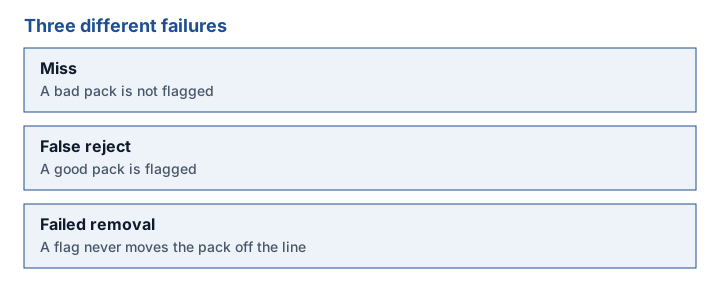
Inspection, reject command and reject confirmation are three records. A miss is a bad pack that was not flagged. A false reject is a good pack that was flagged. A failed removal is a flag that did not take the pack out. Any one of them can be true while the other two look fine. This site has not run a vision trial. Supplier pages about sensors, if you use them, stay labelled as that supplier’s material.
Write the three signals
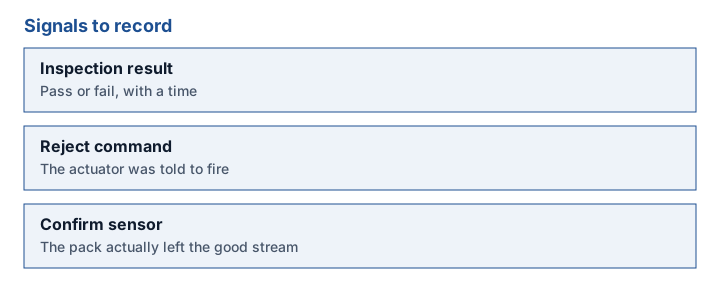
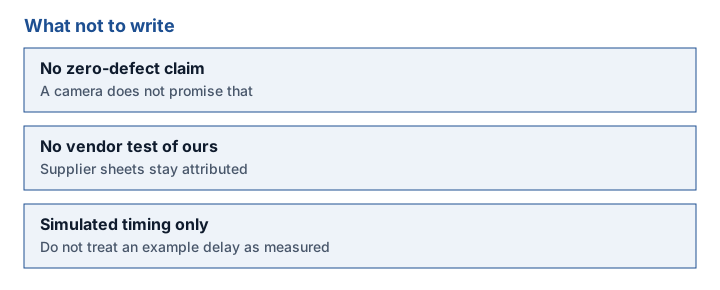
For each event, keep the inspection result, the command sent to the reject device, and the later sensor or count that says the pack left. A hypothetical delay of 200 milliseconds between flag and confirm is an illustration only. It is not a measured installation and it is not a specification to copy.
PackML can be the place a machine reports state, as OMAC describes that standard. It does not prove the reject device fired. Do not write a zero-defect sentence from a camera specification.
The print-and-verify guide uses the same confirm idea for a code. OEE counts need a definition of “good” that matches this confirm step. The section home is Packaging Automation.
Method and sources
The failure split is an editorial checklist. OMAC’s PackML page was read only to keep machine-state language separate from reject confirmation. No vision vendor sheet is treated as an independent test.