
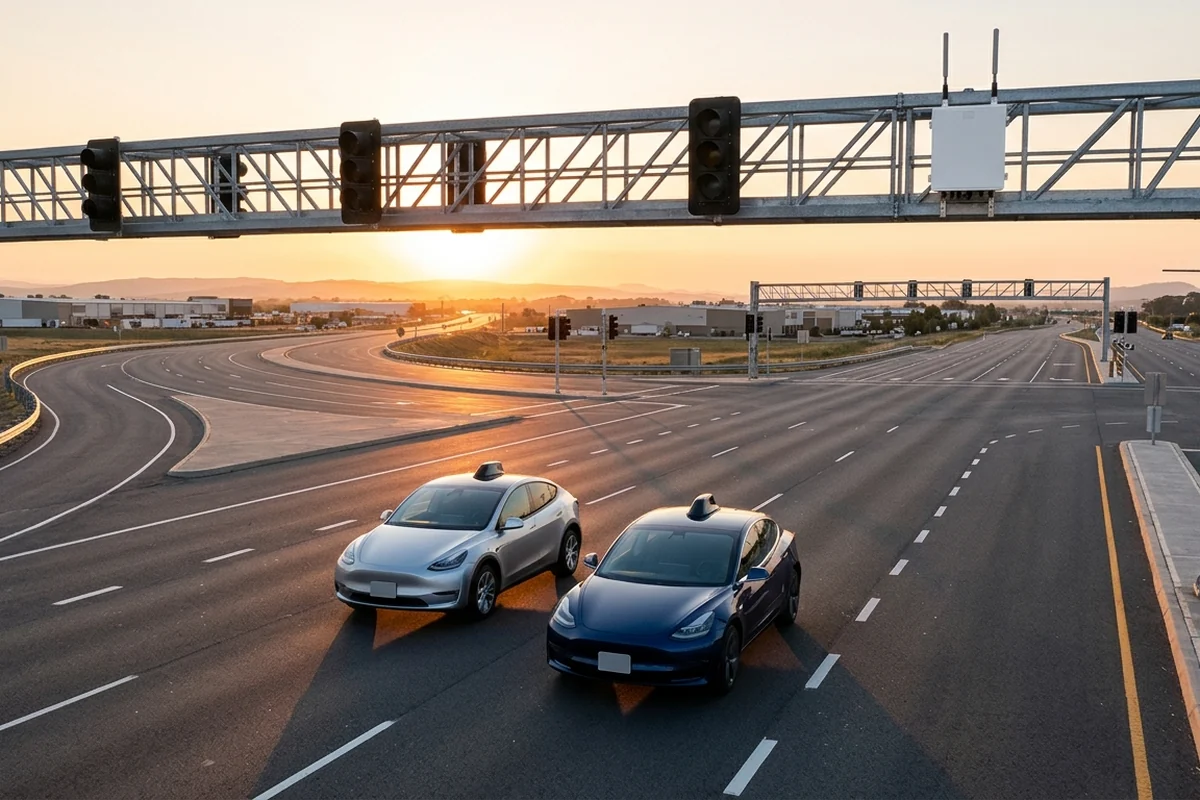
Basic Safety Message (BSM) in V2X: Fields, Cadence & Size
SAE J2735 Basic Safety Message (BSM) guide: ~10 Hz broadcast cadence, ~300-byte signed packet size, mandatory Part I fields, and Part II safety extensions.
Home / Connected Mobility
These guides explain communication paths among vehicles, roadside equipment and traffic systems. The historical trial stays in the archive.
Guides in this section:Basic Safety Message (BSM) in V2X: Fields, Cadence & Size; C-V2X vs DSRC Radio Access: 3GPP PC5 Direct Sidelink, IEEE 802.11p & Roadside Interoperability; Roadside Unit (RSU) Deployment: Radio Coverage, Signal Controller Interface & Backhaul Architecture; How a vehicle-to-infrastructure path is described; V2V, V2I and V2N are different paths; What V2X refers to on this site.
SAE J2735 Basic Safety Message (BSM) guide: ~10 Hz broadcast cadence, ~300-byte signed packet size, mandatory Part I fields, and Part II safety extensions.
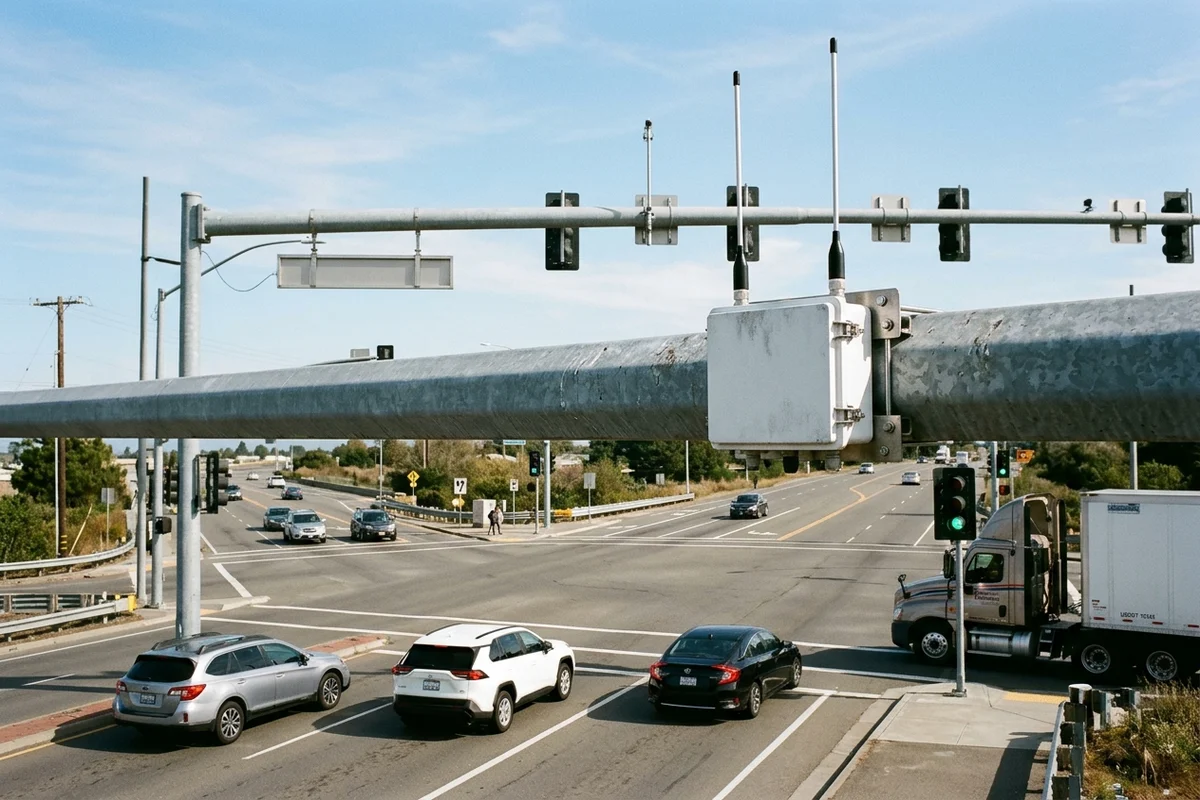
3GPP LTE-V2X PC5 and IEEE 802.11p (DSRC or ITS-G5) both operate in the 5.9 GHz band for direct communications. Compare C-V2X and DSRC radio access and RSU/OBU interoperability.
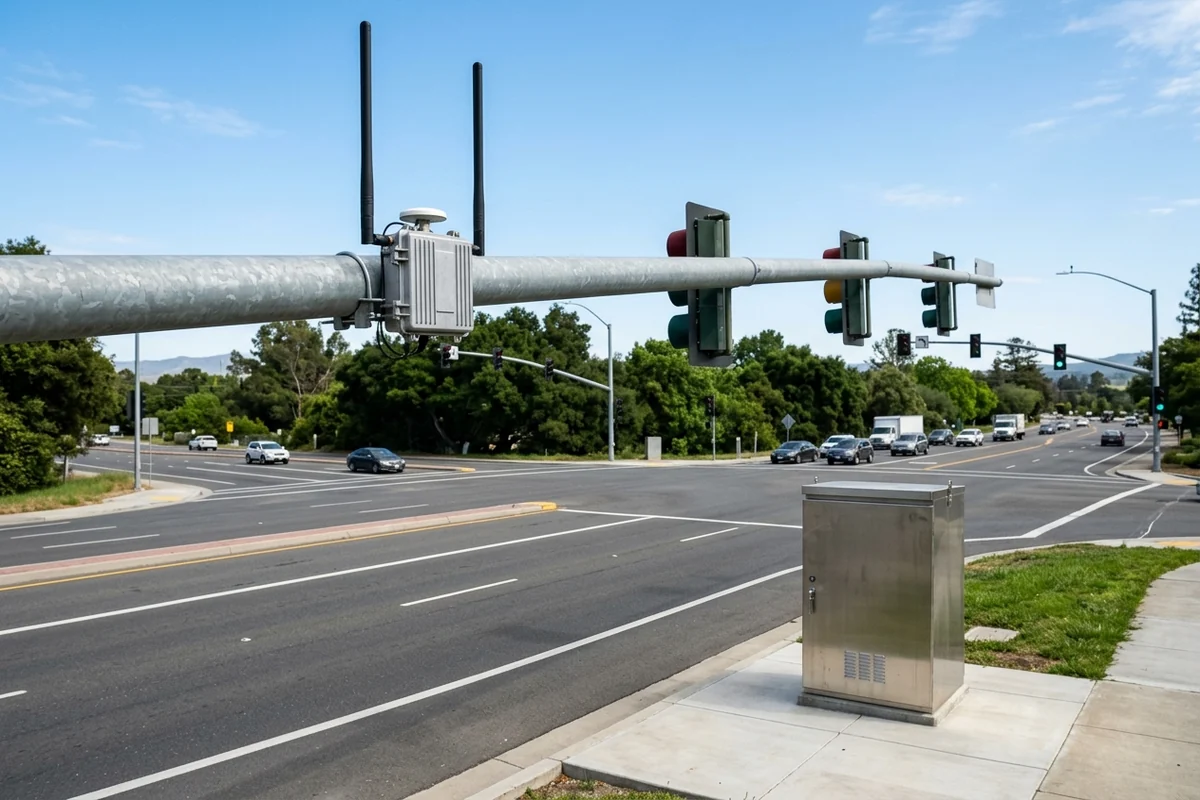
To support V2I applications, DSRC must be integrated with existing traffic equipment, such as Signal Controllers and backhaul connections to Traffic Management Centers (TMCs).
The TUM simTD page describes vehicles, roadside units and traffic centres. Packaging handoffs are a separate guide.
Splitting vehicle, roadside and network paths stops three different links from being treated as one feature. The split follows the path each link uses.
V2X here means vehicle communication with other vehicles, roadside equipment and networks. Historical trial results are on the archive.