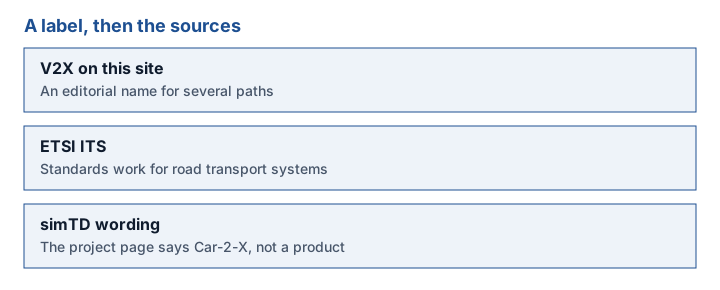
“V2X” is used loosely. On this site it means communication between a vehicle and something else: another vehicle, a roadside unit, or a network that can reach a traffic centre. The letters are an editorial label. They are not a test result from the historical simTD project.
ETSI’s transport-technologies page says it develops standards for Intelligent Transport Systems for road users, to support safer and more efficient transport. That is a standards role. It does not, on the page read here, define a product called V2X or state a radio range. The historical project page at the Technical University of Munich uses the term Car-2-X for communication between vehicles and between vehicles and traffic infrastructure. Those two sources should not be merged into one sentence.
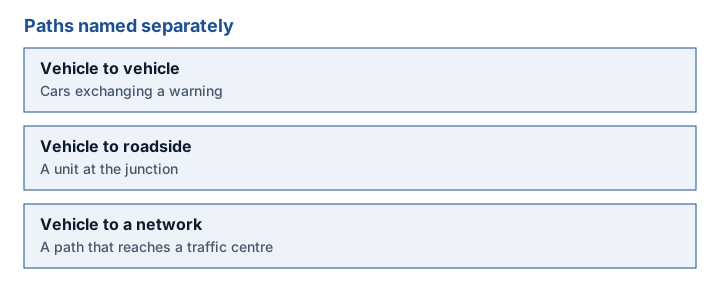
The three paths are written out in V2V, V2I and V2N. How a roadside path can be described, using the project page’s own wording and labelled as that description, is in how a vehicle-to-infrastructure path is described.
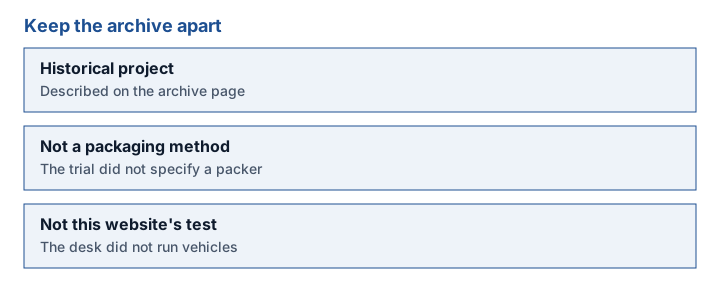
The historical overview is the place for project dates and participants. Nothing in that record says the project built packaging machinery. New packaging guides on this site are a separate subject.
The section home is Connected Mobility.
Method and sources
ETSI’s transport-technologies page and the TUM simTD project page were read on 14 October 2026. No radio specification was opened, so no range or latency is stated.