
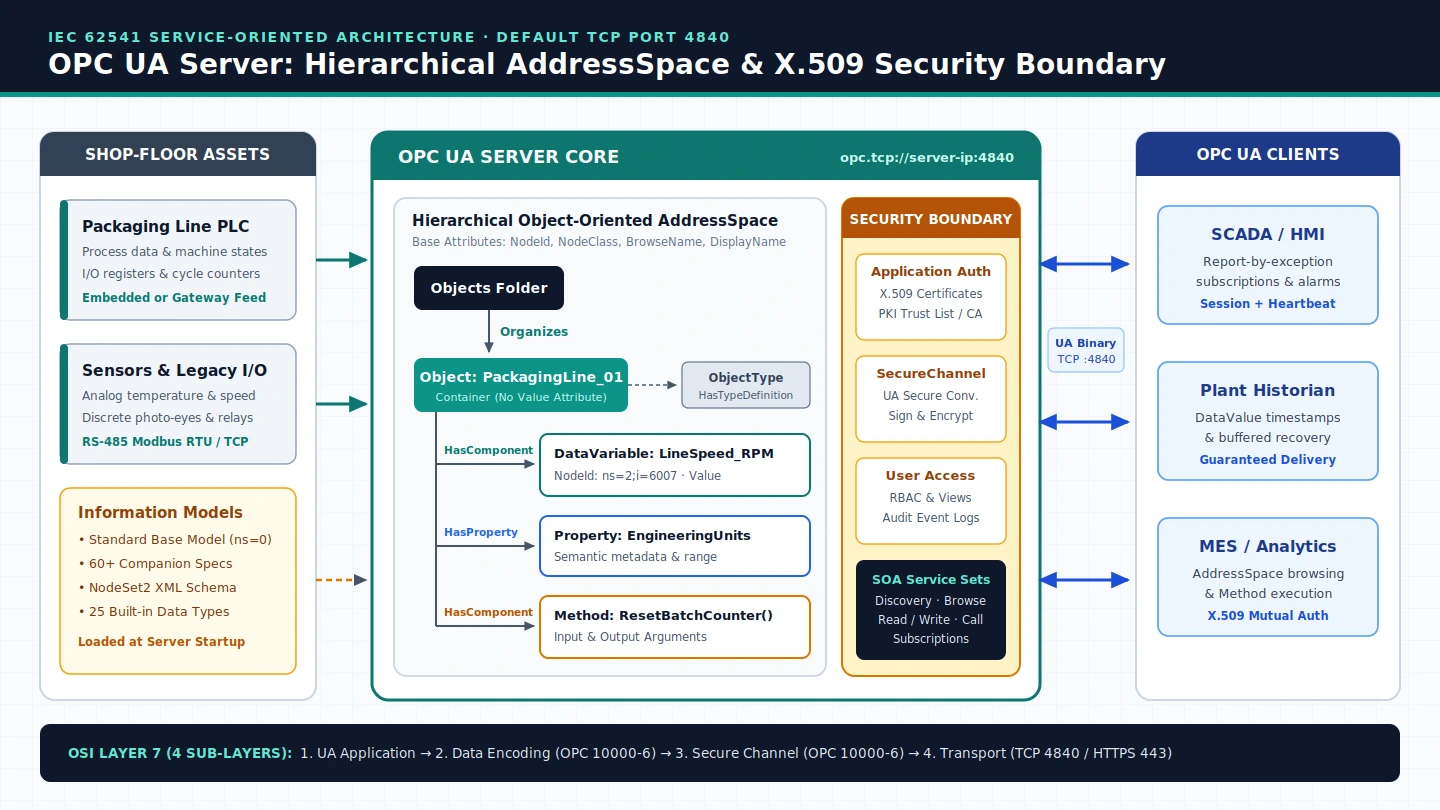
OPC UA Server Architecture: Address Space & Security
An OPC UA server (IEC 62541) structures machine data in a hierarchical AddressSpace over TCP port 4840 with X.509 certificates and scales via gateways.
An OPC UA server (IEC 62541) structures machine data in a hierarchical AddressSpace over TCP port 4840 with X.509 certificates and scales via gateways.
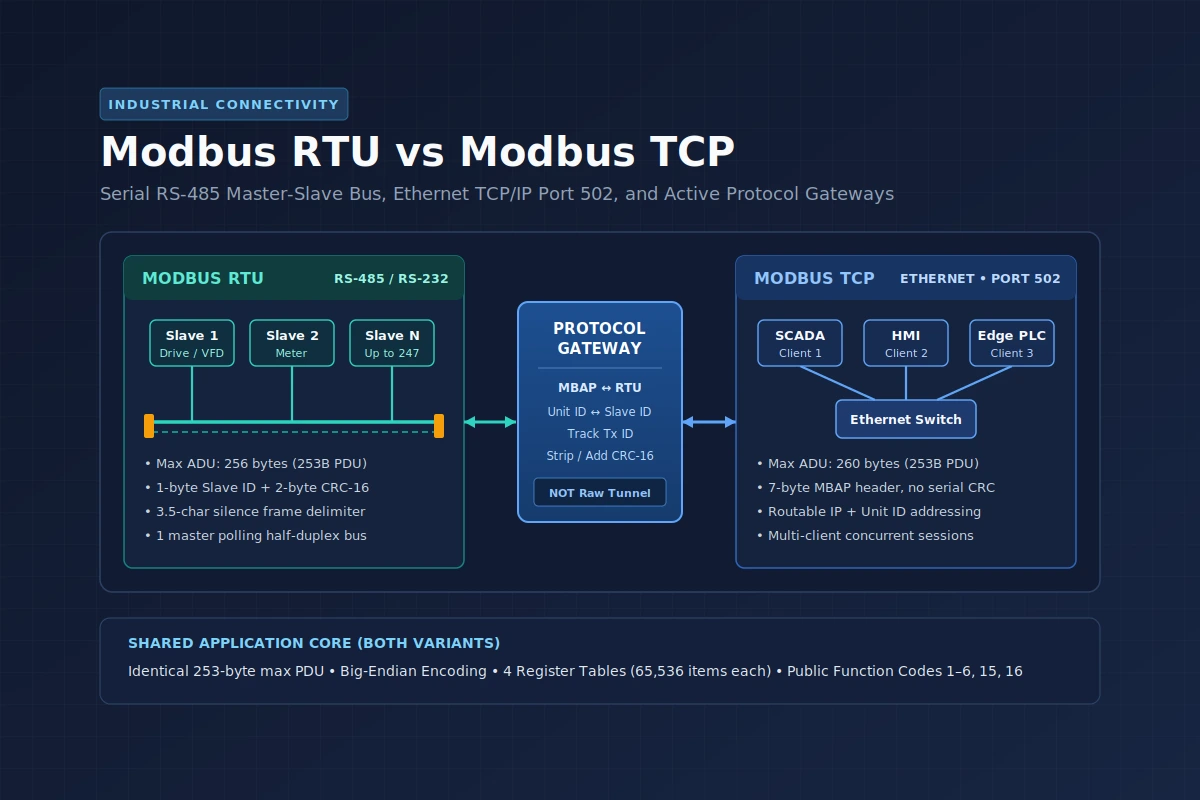
Modbus RTU uses RS-485 serial framing, 1-byte slave IDs, and CRC-16, while Modbus TCP runs on Ethernet port 502 with 7-byte MBAP headers.
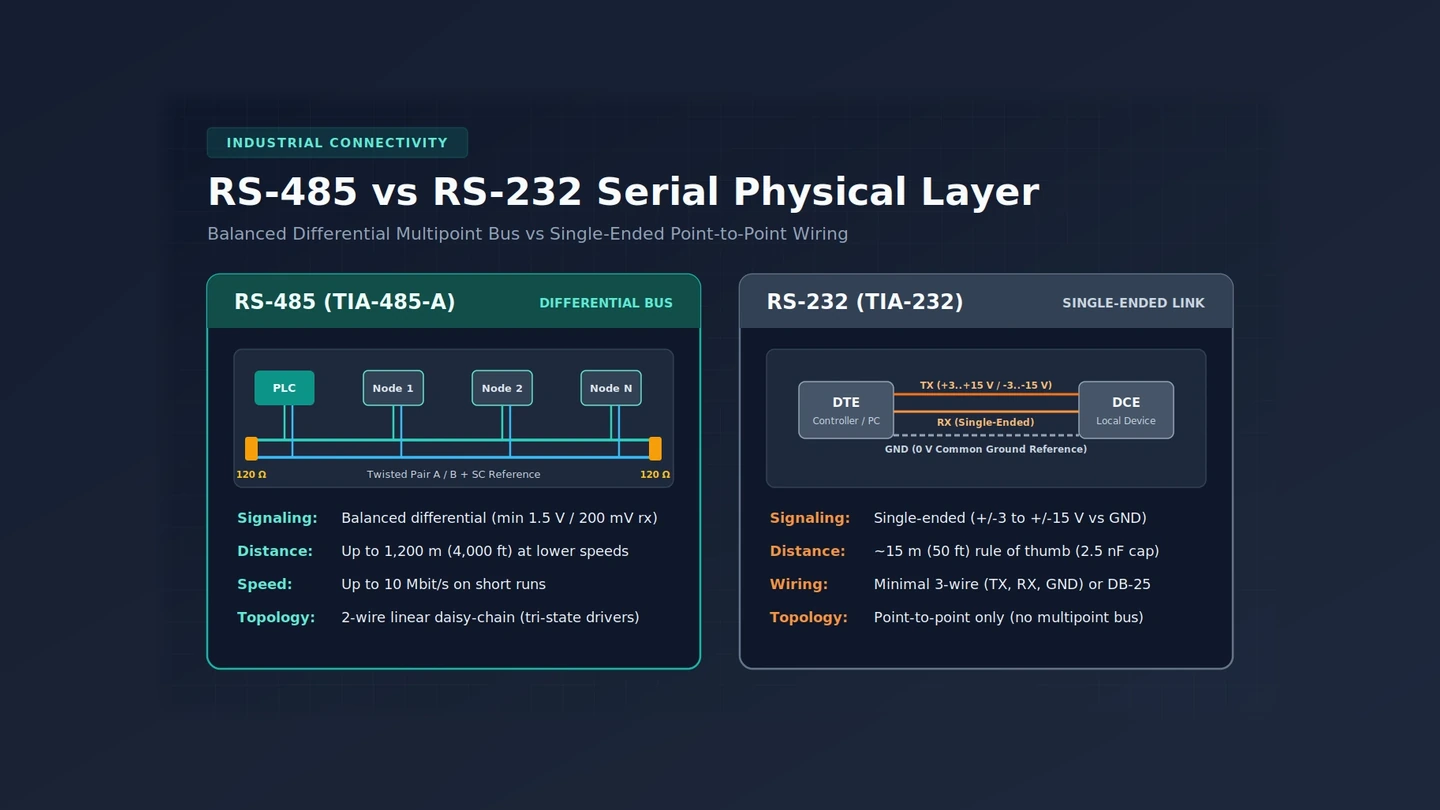
Compare RS-485 differential multipoint buses against RS-232 single-ended links across voltage swings, wiring distance, termination, and Modbus RTU.
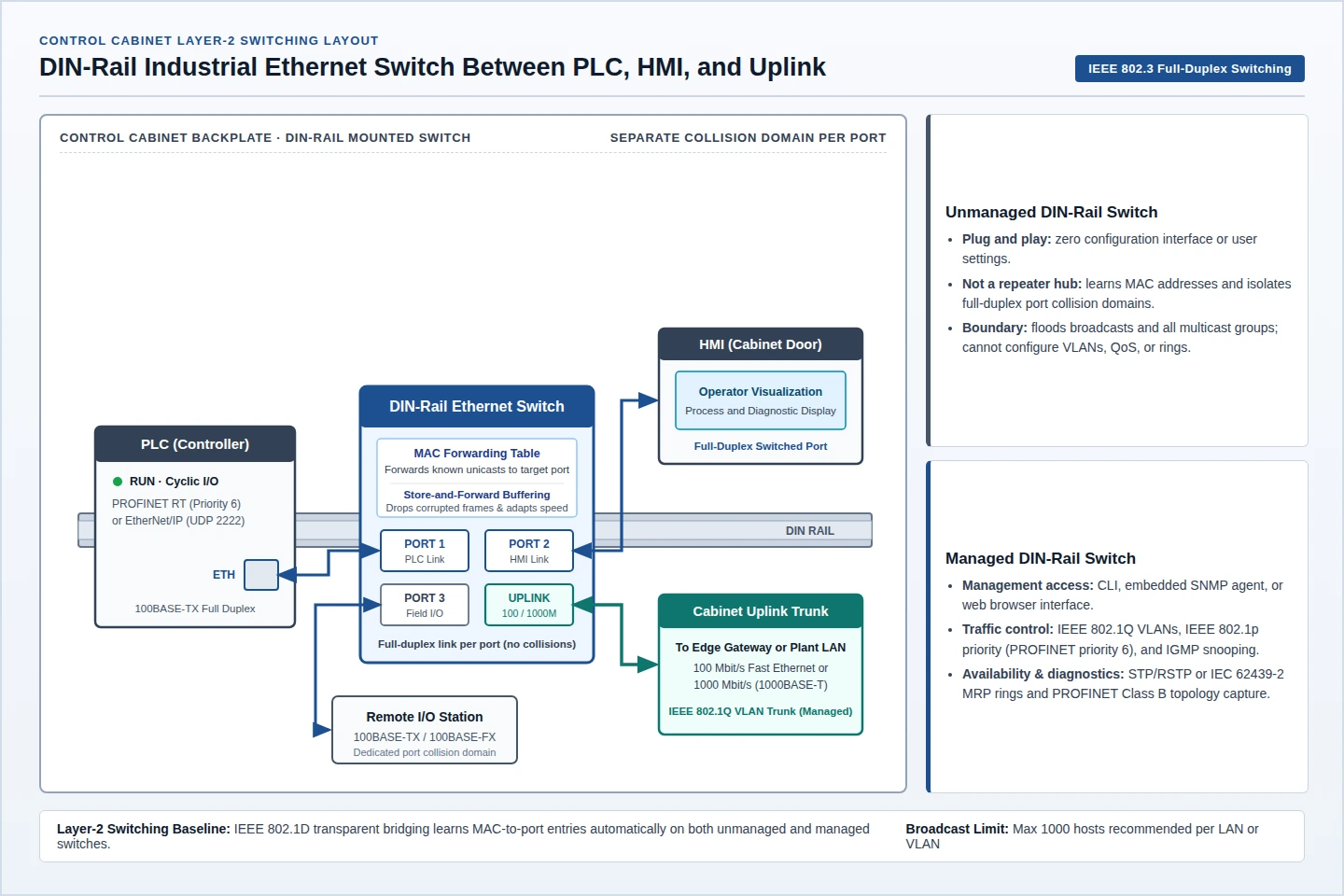
Choose a managed industrial Ethernet switch for VLANs, priority tags, multicast filters, or ring recovery. An unmanaged switch cannot be configured.
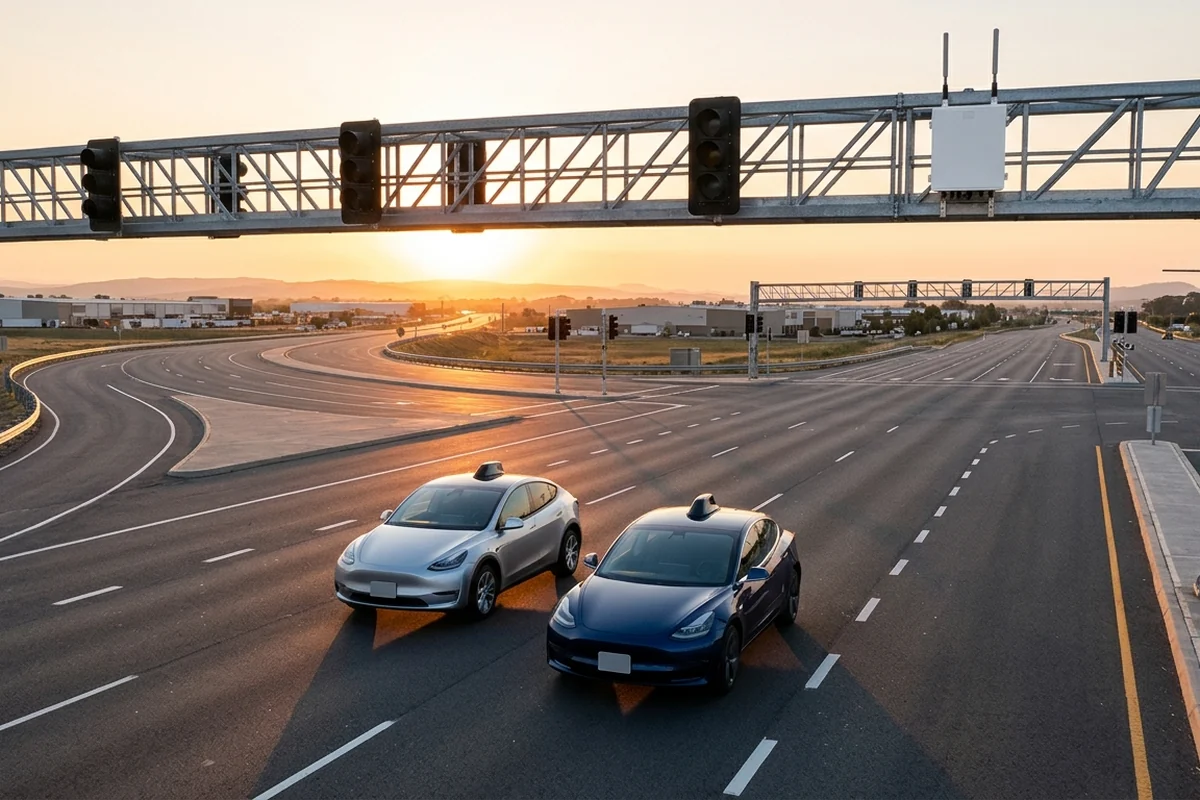
SAE J2735 Basic Safety Message (BSM) guide: ~10 Hz broadcast cadence, ~300-byte signed packet size, mandatory Part I fields, and Part II safety extensions.
In PubSub (Clause 4.1), Publishers and Subscribers are decoupled so the number of Subscribers receiving data from a Publisher does not affect the Publisher.
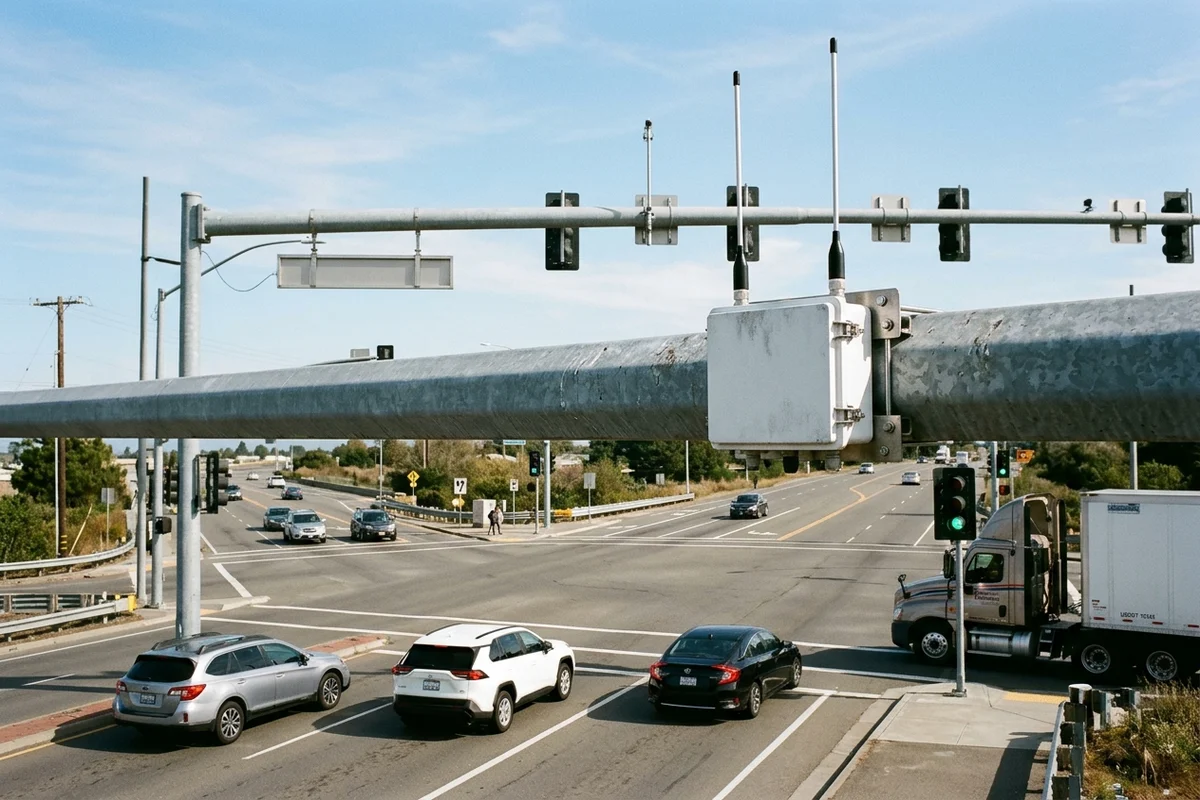
3GPP LTE-V2X PC5 and IEEE 802.11p (DSRC or ITS-G5) both operate in the 5.9 GHz band for direct communications. Compare C-V2X and DSRC radio access and RSU/OBU interoperability.
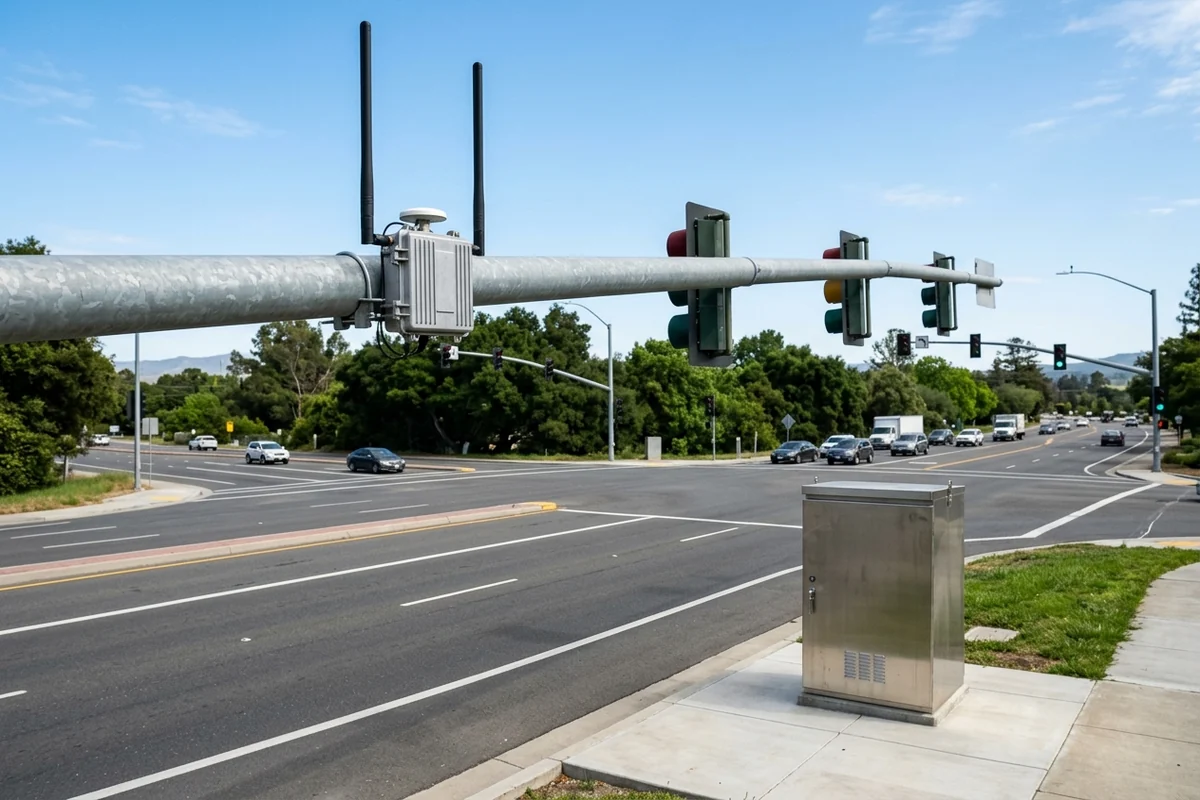
To support V2I applications, DSRC must be integrated with existing traffic equipment, such as Signal Controllers and backhaul connections to Traffic Management Centers (TMCs).
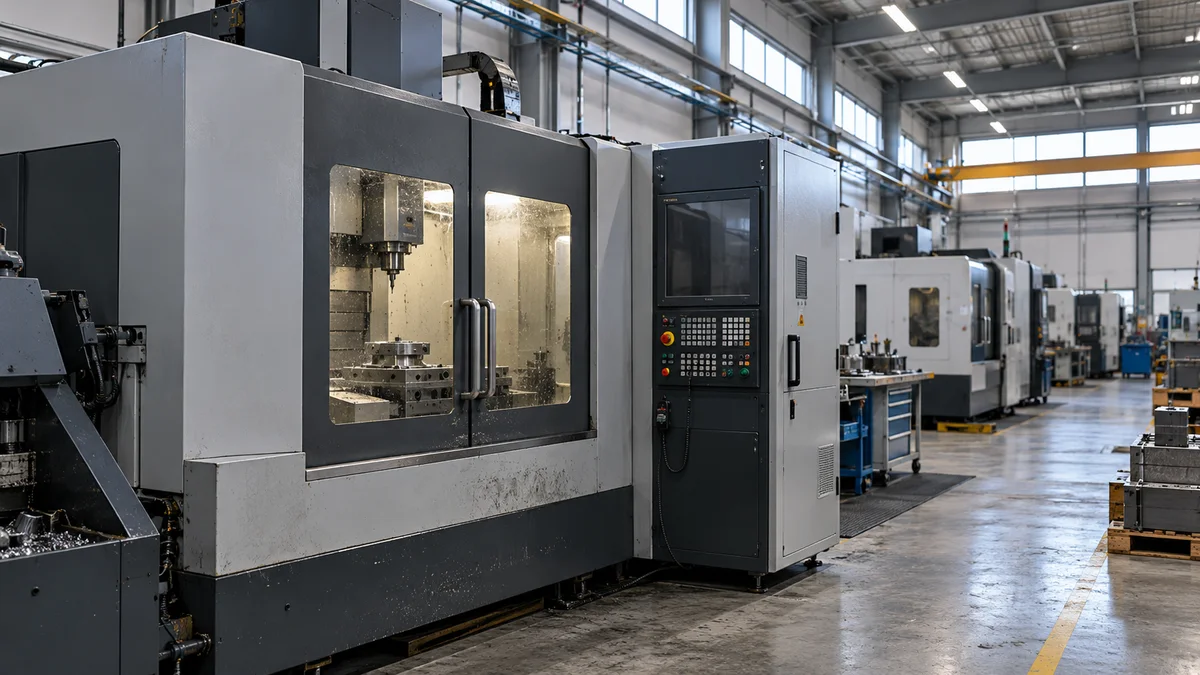
Compare MTConnect telemetry with OPC UA reads, writes and methods. Understand the companion specification and use a machine-interface selection checklist.
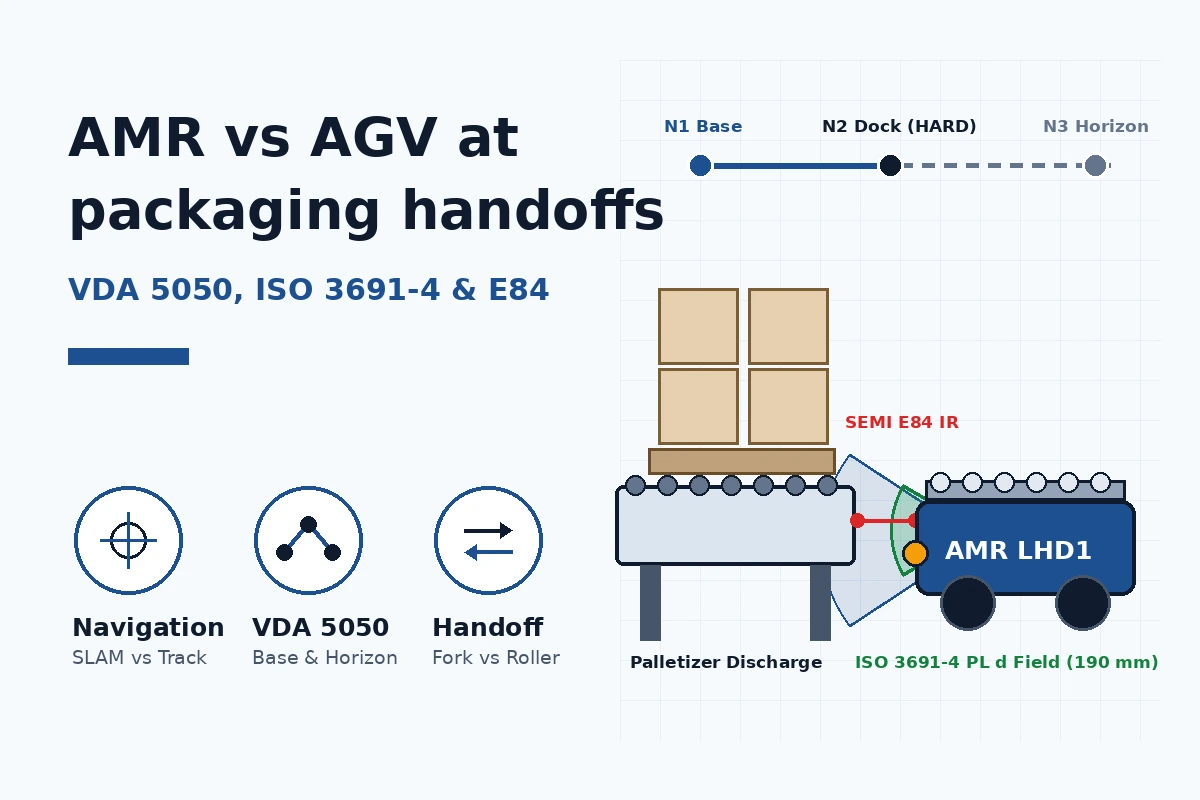
Compare AMR vs AGV navigation, VDA 5050 fleet management, ISO 3691-4 safety field switching, and pallet jack vs roller-top handoffs at packaging lines.
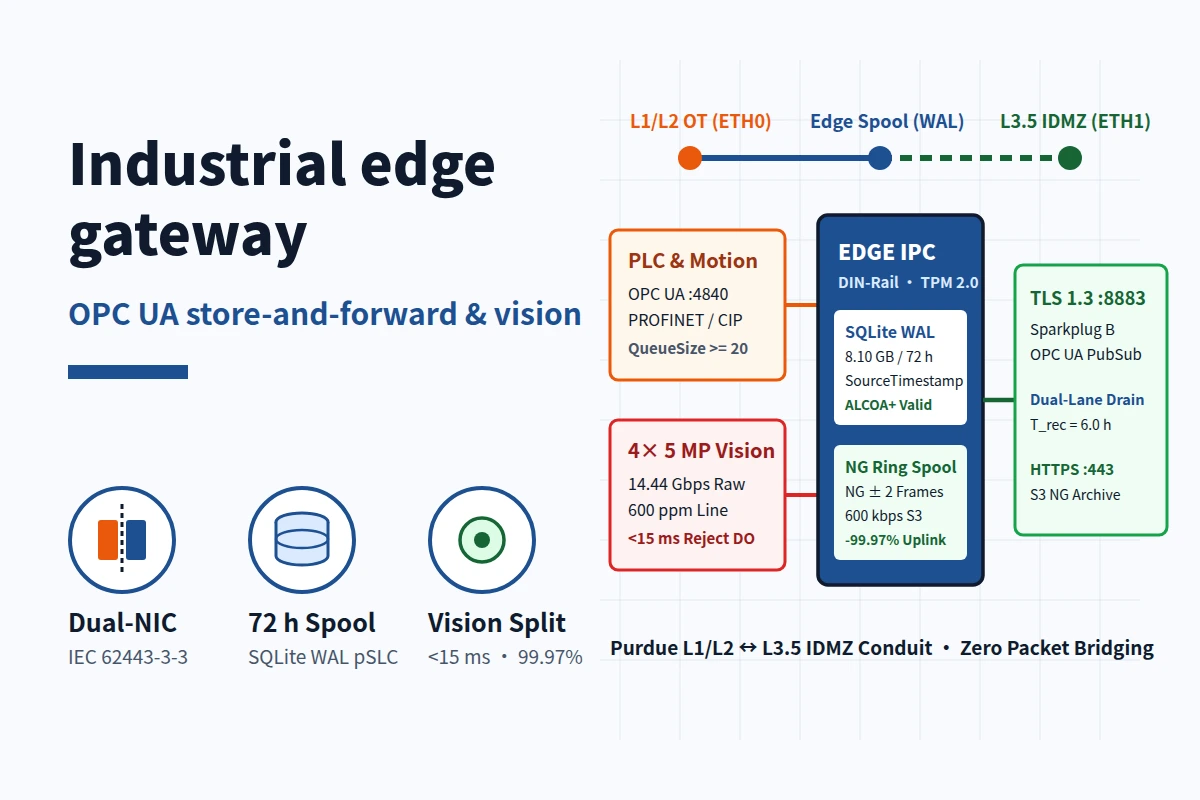
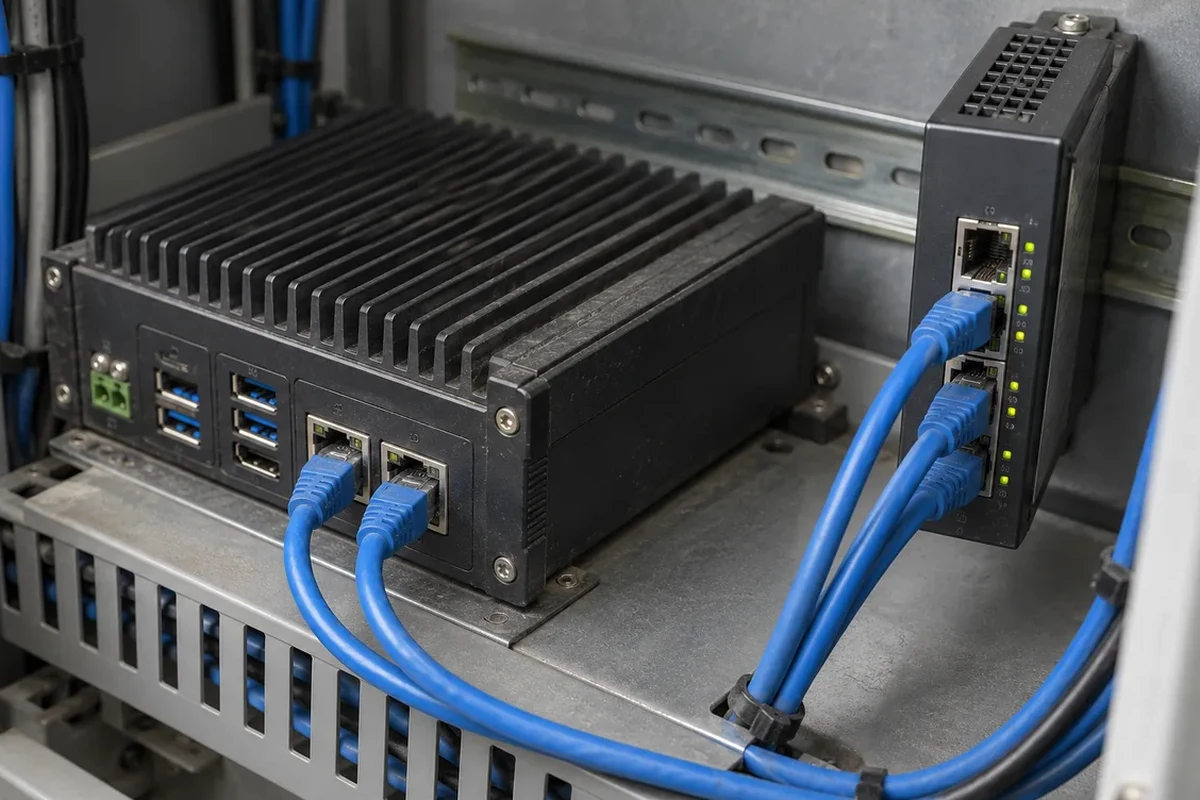
Design an industrial edge gateway for packaging lines with IEC 62443-3-3 dual-NIC isolation, OPC UA edge buffering, SQLite WAL spool sizing, and machine vision offload.
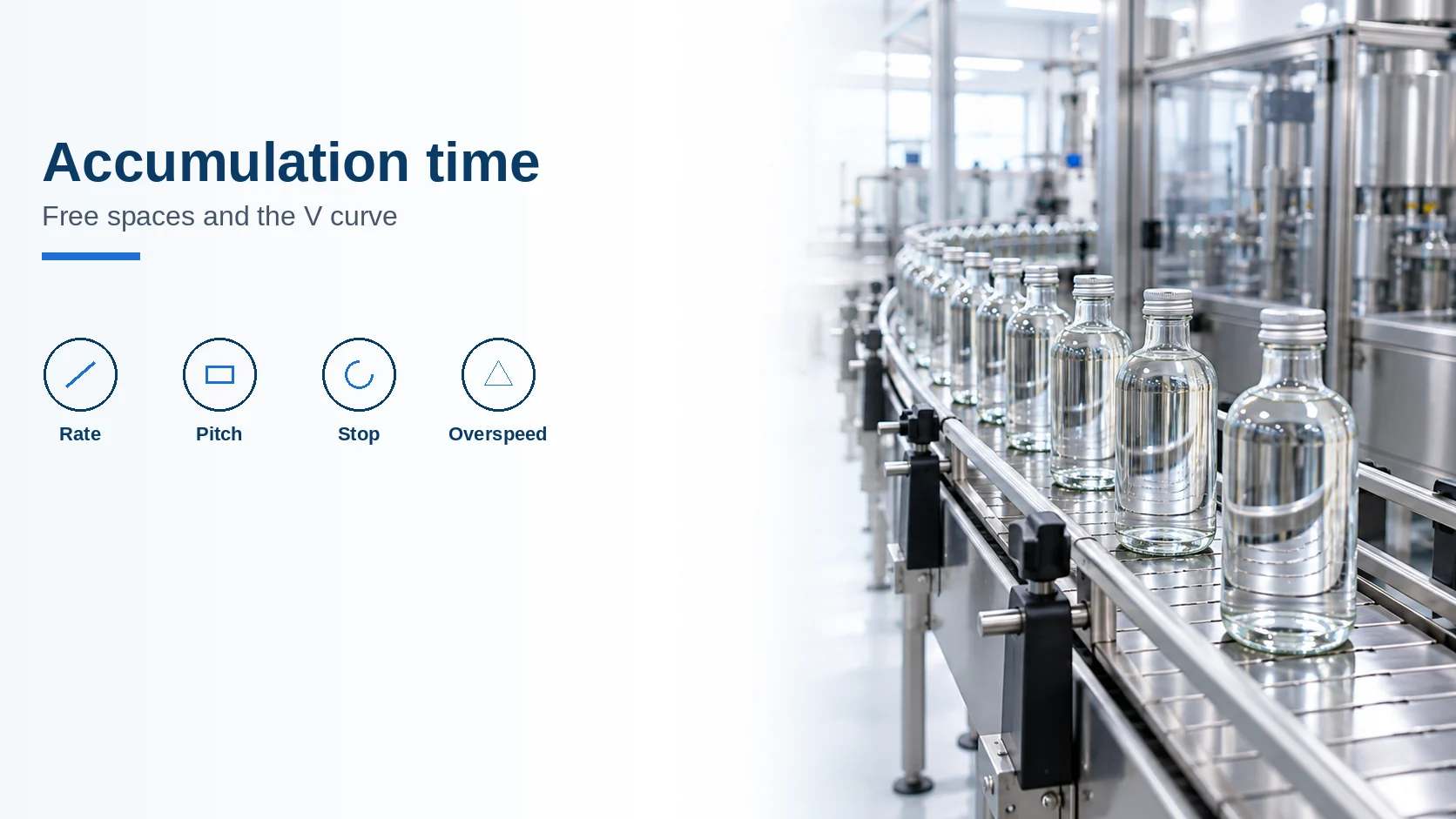
Turn a downstream stop into free conveyor spaces, then check whether V-curve overspeed can clear that queue before the next stop.
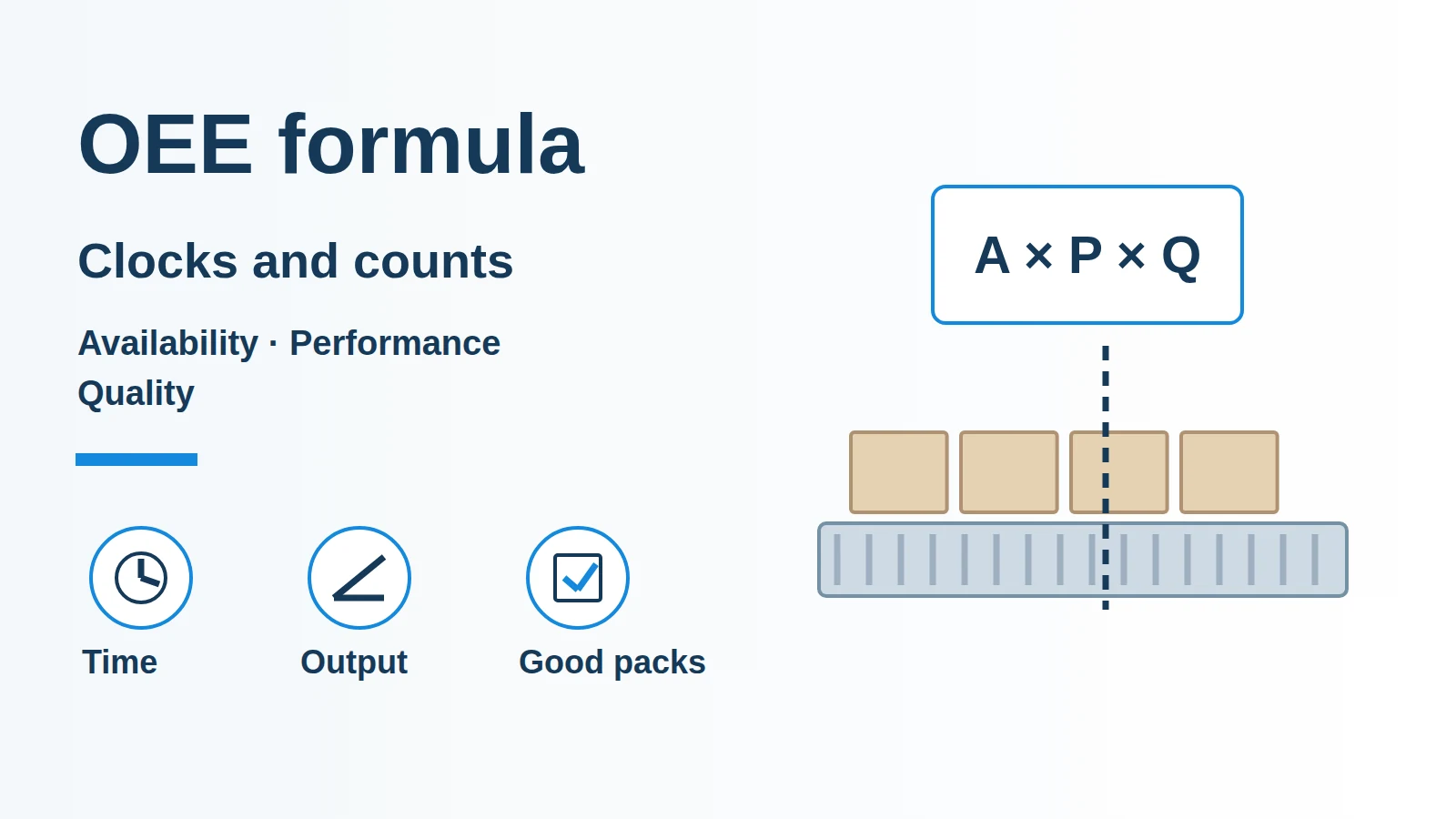
Reconstruct the OEE formula from its clocks and counts, map performance to ISO effectiveness, and keep a time ledger that explains the losses.
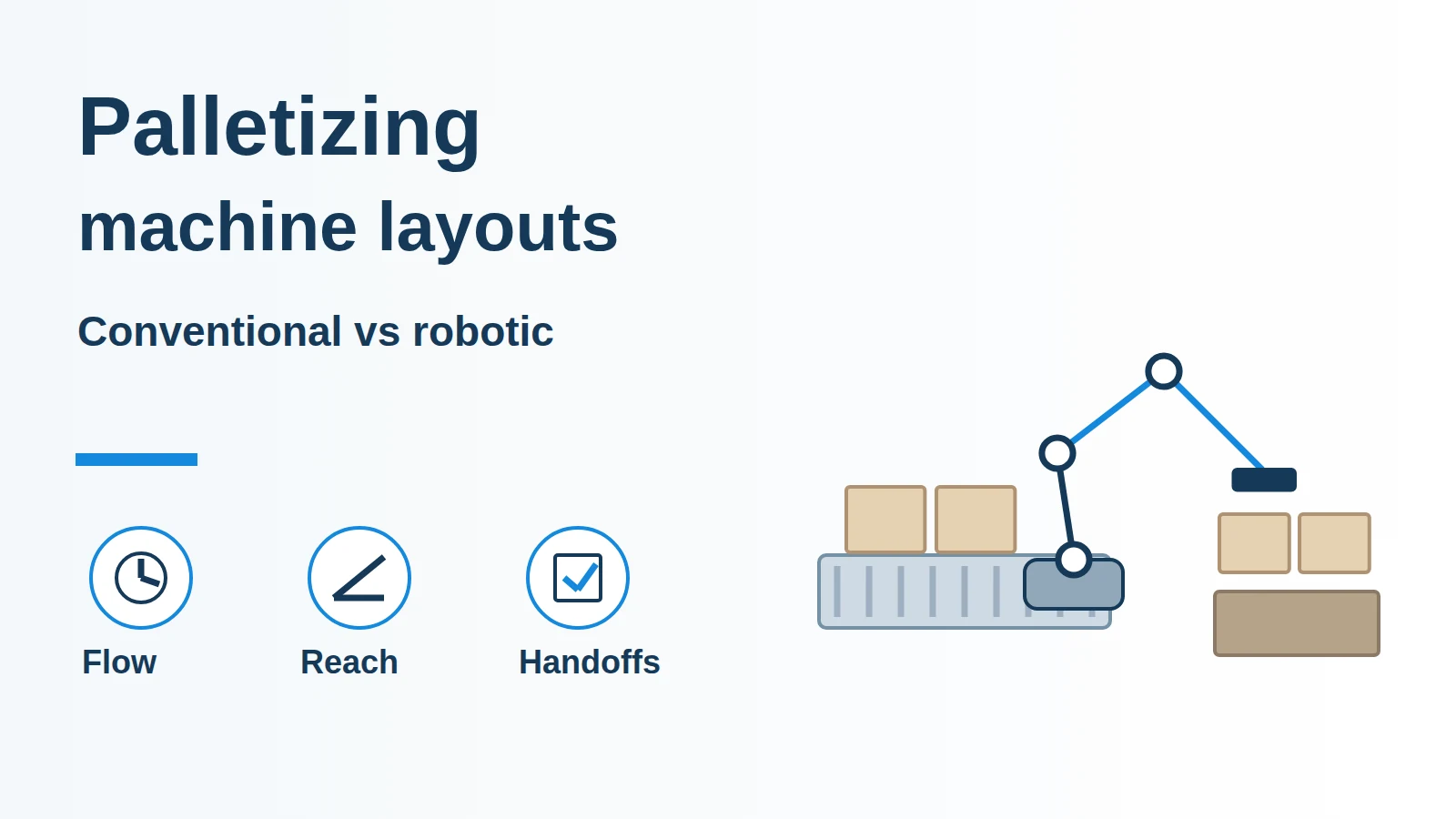
Compare conventional layer formation with robotic pick-and-place layouts, then check load height, reach, pallet exchange and the full handoff boundary.

VDA 5050 version 3.0.0 is the fleet-to-robot interface. It does not define the packaging machine's signals or replace a safety standard.
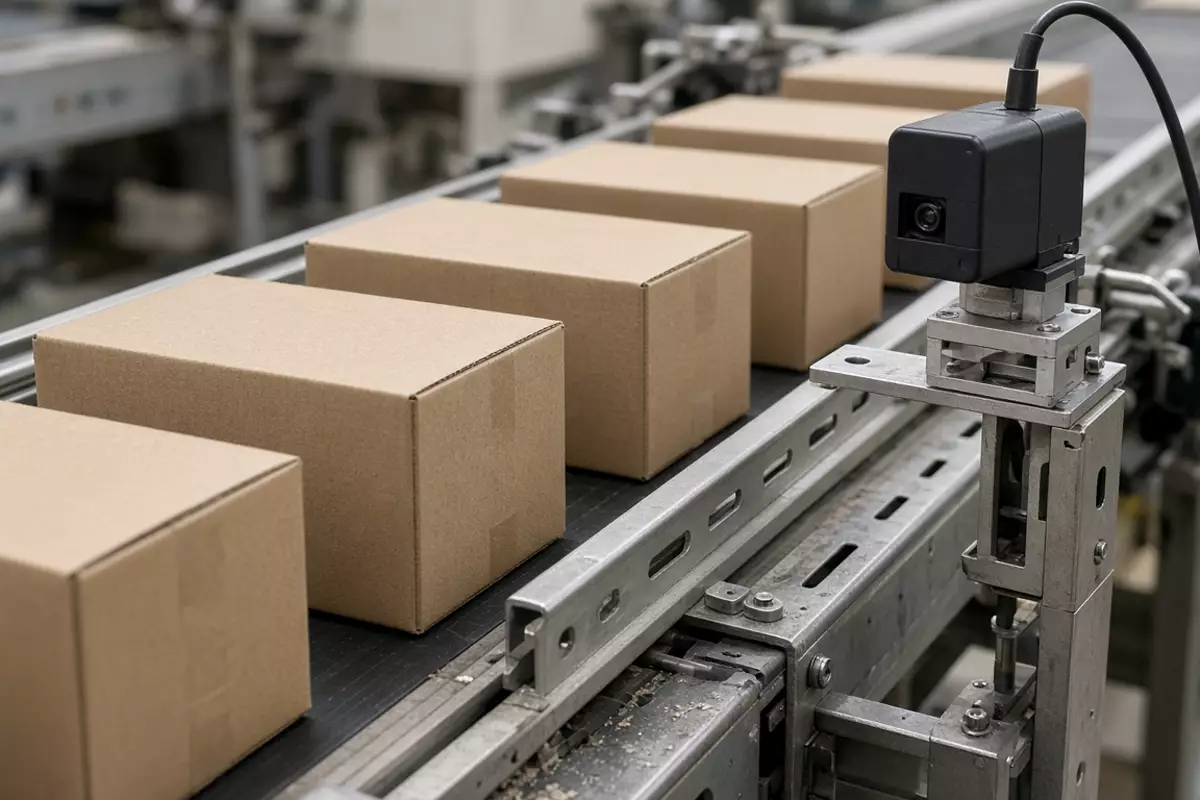
Case packing and palletizing need a complete signal, an identity for the case or pallet, and a blocked state. Match the machine to those signals on the documents for the station.
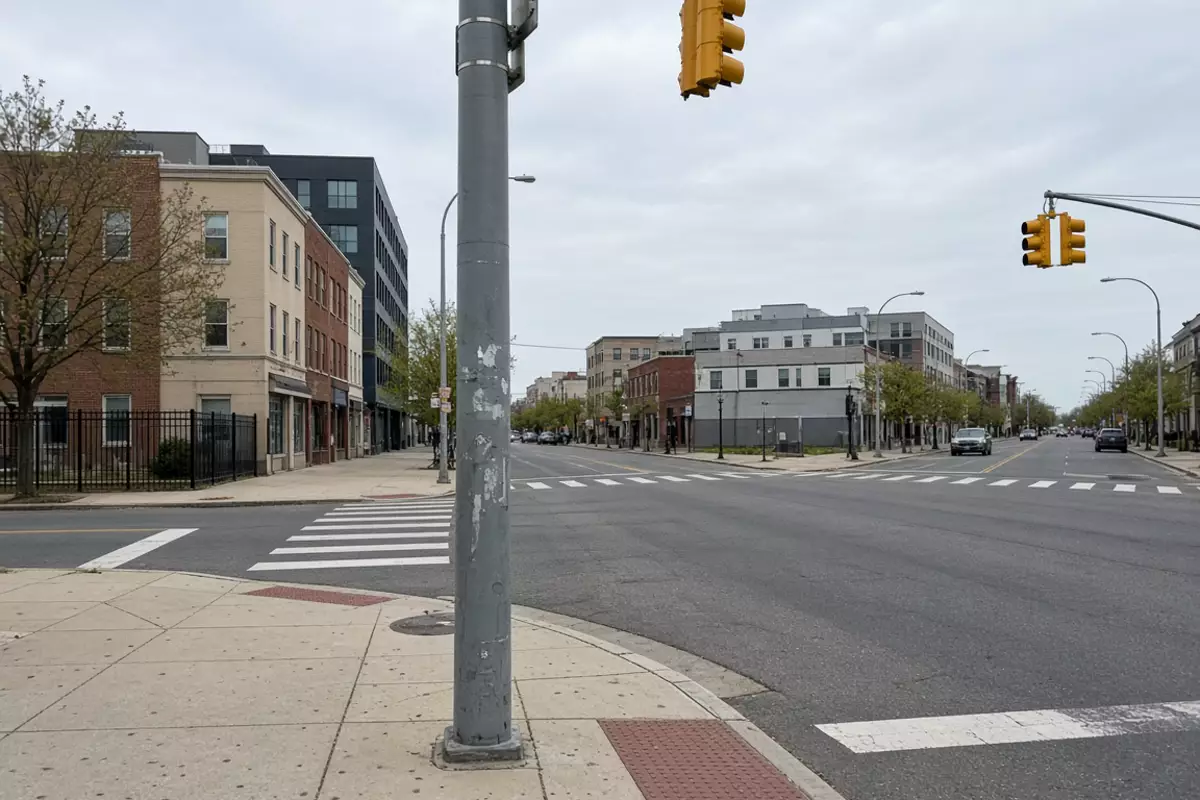
The TUM simTD page describes vehicles, roadside units and traffic centres. Packaging handoffs are a separate guide.
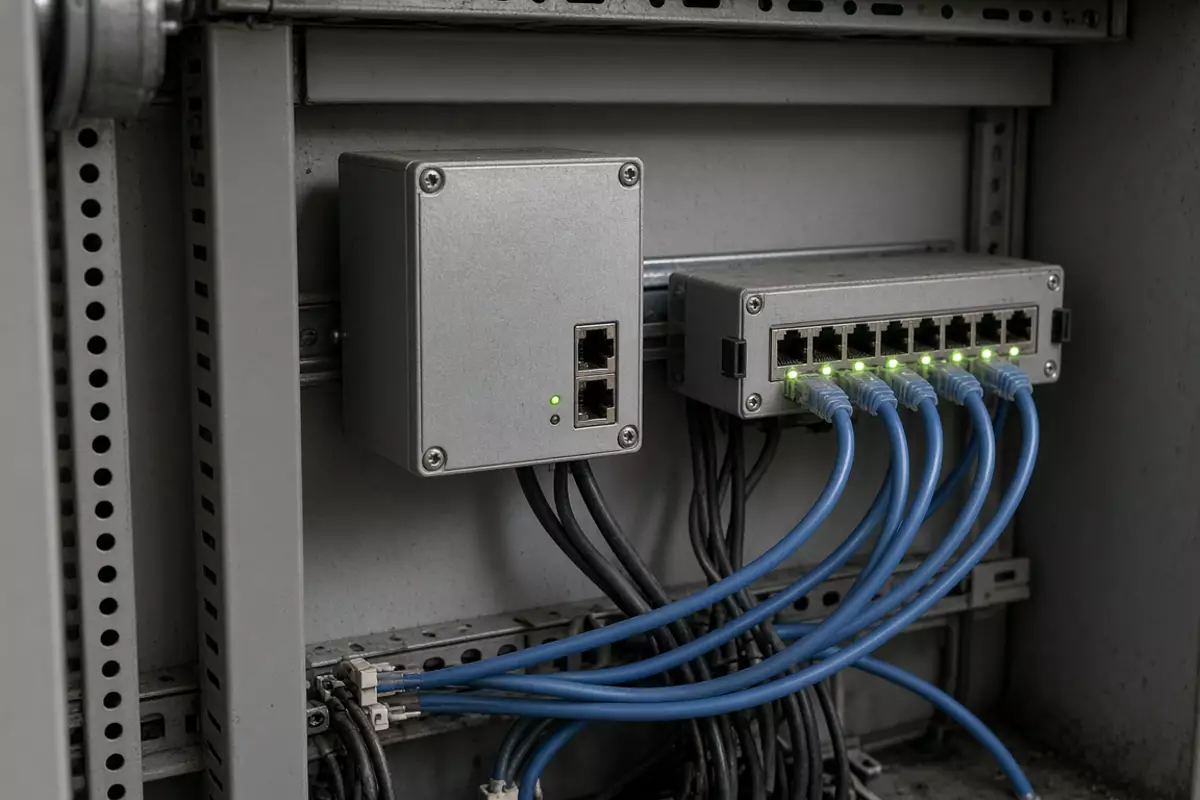
Three layers for industrial data: device, gateway and platform. Take latency, gateway brand and factory name from the cabinet documents. OPC UA is the information model those documents may use.
A machine's rated speed is not the line's rate. Buffers and handoff signals decide whether the next station can take the pack.
OEE is only as clear as the clocks and counts behind it. Name planned time, stops and good product before anyone publishes a percentage.
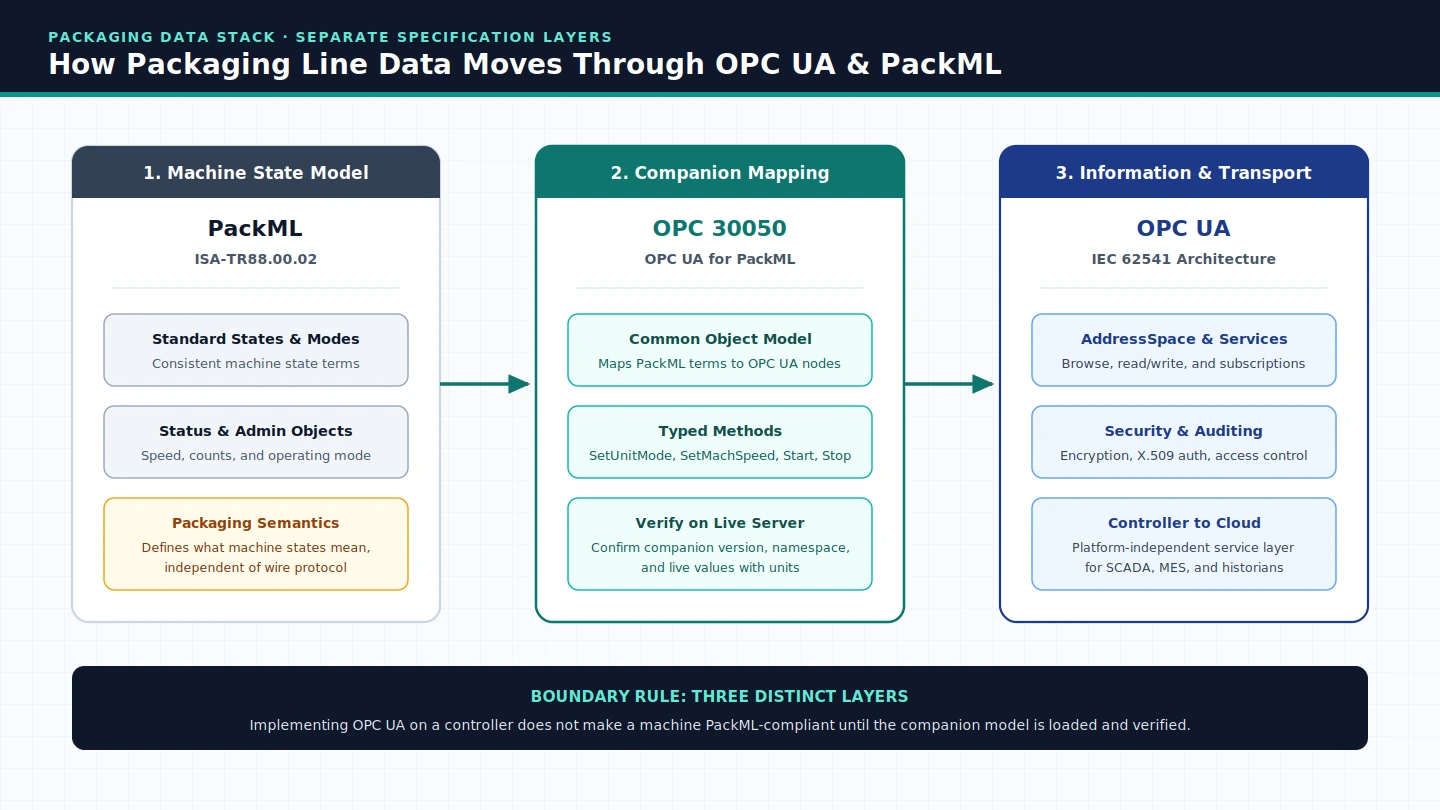
OPC UA is an information model, PackML is a machine state model, and a companion spec maps one into the other. They are not the same layer.
A reading guide to PackML: what OMAC says it is for, which OPC UA section names the states, and what a state list does not prove.
Printing a code is not the same as proving the right code was read and that a bad pack left the line. Record each step.
Splitting vehicle, roadside and network paths stops three different links from being treated as one feature. The split follows the path each link uses.
A vision system can flag a pack and still fail to remove it. Check misses, false rejects and the confirm signal before promising a result.
V2X here means vehicle communication with other vehicles, roadside equipment and networks. Historical trial results are on the archive.