If the cartoner is quoted at one speed and the case packer at another, the line does not run at the higher number. The sustained rate is limited by the slowest station that must run in series, and by whether a buffer can absorb a short stop.
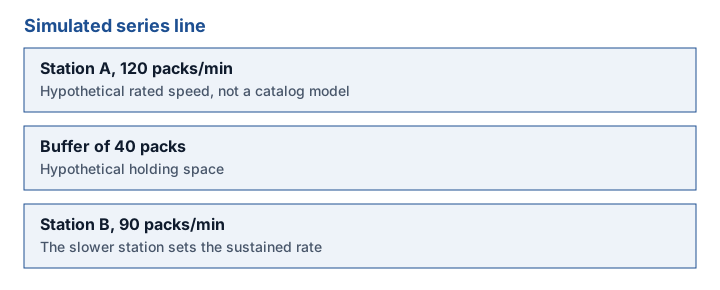
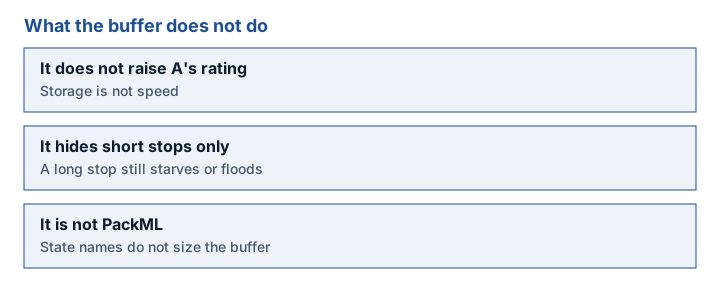
A rated speed for one machine is not a line capacity. The figures in the diagram are a simulated example, not a measurement and not a machine model. Station A is imagined at 120 packs per minute, station B at 90, with space for 40 packs between them. While both run, the line cannot sustain 120. The buffer can cover a short stop of B. It cannot cover a long one, and it does not change A’s nameplate.
Name the handoff
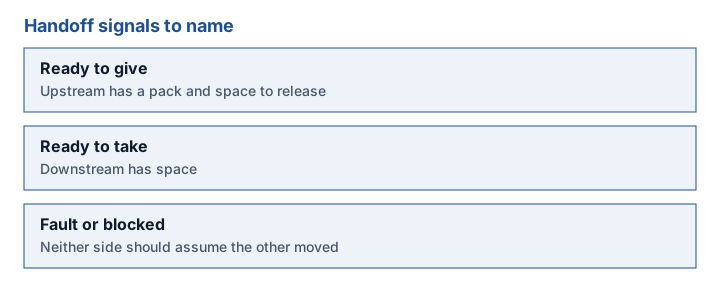
Write down which signal means the upstream station may release a pack, which signal means the downstream station has space, and which signal means the path is blocked. PackML, as OMAC describes it, gives a common way to talk about machine state and machine data. It does not calculate buffer length. Keep the state model and the buffer arithmetic in separate columns of the same sheet.
When the example does not apply
Parallel stations, reject lanes and manual pack-off change the arithmetic. Do not paste the 120, 90 and 40 figures into a specification. They are hypothetical. The OEE data guide is about counts and clocks, not about these speeds. Case and pallet signals are in case packing and palletizing. The section home is Packaging Automation.
Method and sources
The speed figures are simulated. The only external source used for the state-model boundary is the OMAC PackML page, read on 14 October 2026. No research-library document supplied a rated speed for this example, so none is cited as a machine fact.