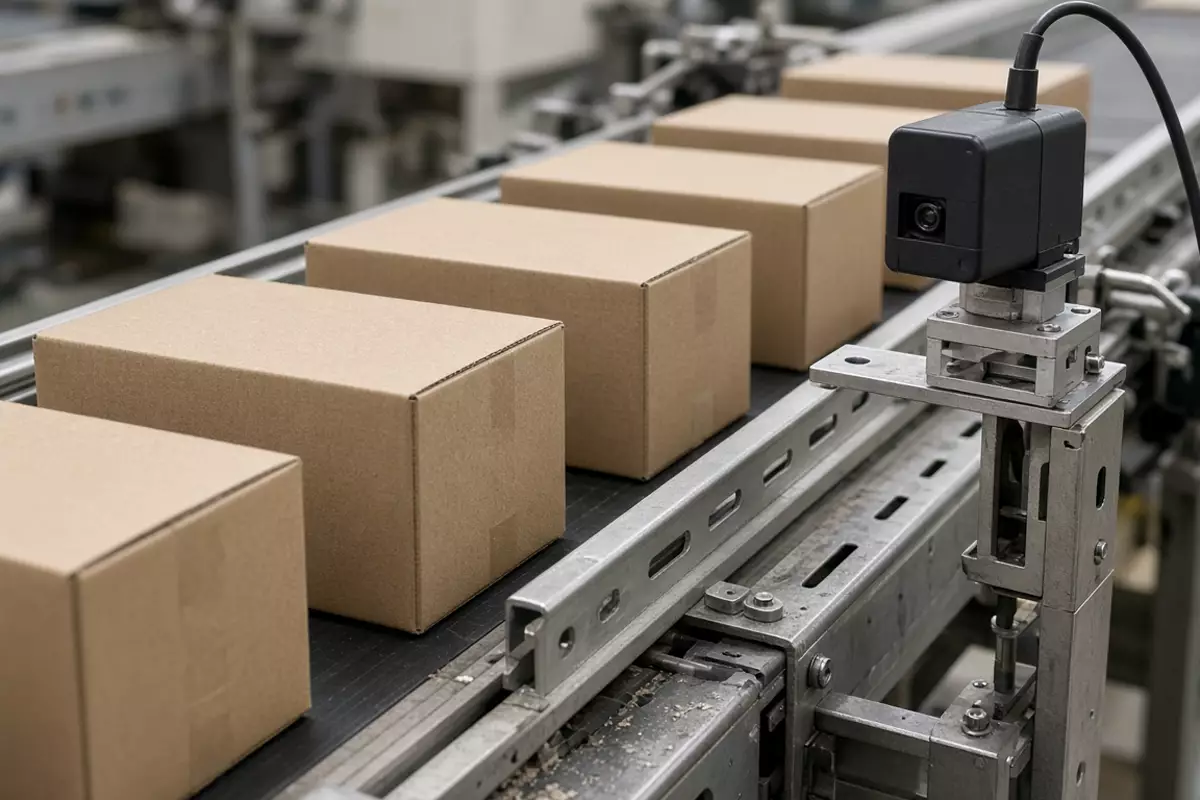
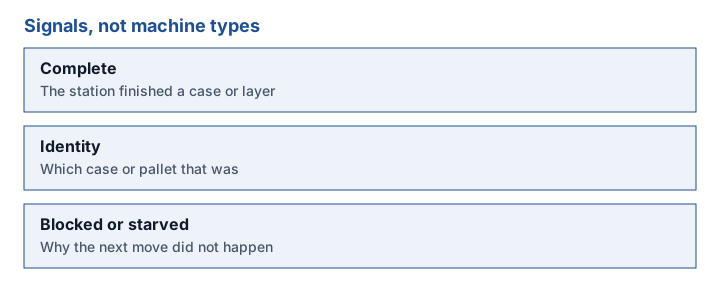
The case packer can finish a case while the palletizer is not ready to take it. The data that makes that visible is small: a completion signal, an identity for the unit, and a blocked or starved state.
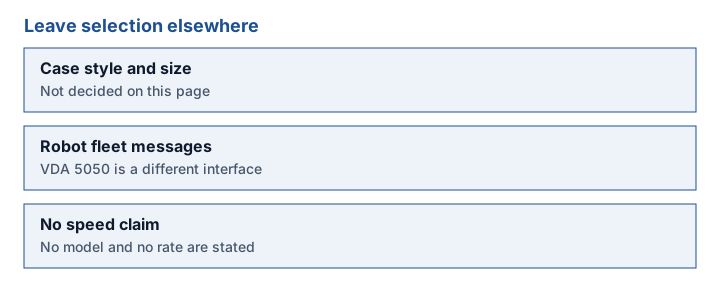
Name completion, identity and blockage before you compare case packers or palletizers. This page does not choose a machine, a case style or a pallet pattern. Those belong in an equipment specification you write against the products you actually run.
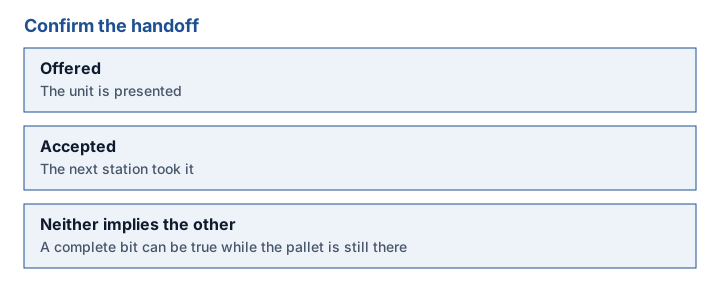
A completion bit means the station believes it finished. An accepted bit means the next station took the unit. They are not substitutes. A simulated pallet identity “P-01” in a workshop log should be marked hypothetical.
If a mobile robot removes the pallet, the fleet messages follow a different specification. VDA 5050 version 3.0.0 is the fleet-to-robot interface described in AMR handoffs. It does not define the packer’s completion bit. PackML, as OMAC describes it, is a machine-state and machine-data convention, not a pallet pattern.
Buffer behaviour is covered in line buffers and handoffs. The section home is Packaging Automation.
Method and sources
No case packer or palletizer model is named because no source read for this page supplied one that this guide needs. OMAC PackML and VDA 5050 v3.0.0 were read on 14 October 2026 for the interface boundaries only.