
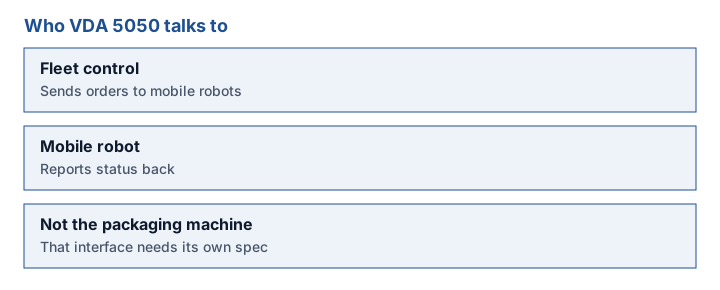
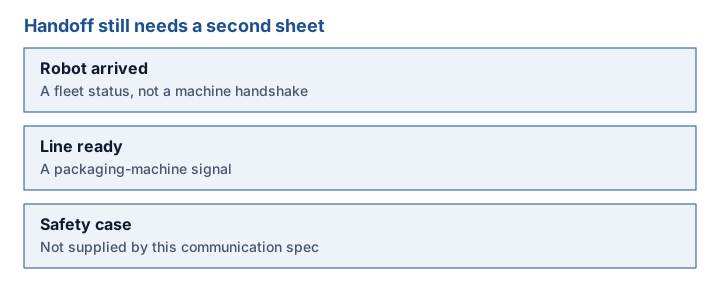
A mobile robot can arrive at a packaging line and still have no agreed signal with the case packer. The fleet messages and the machine messages are different interfaces.
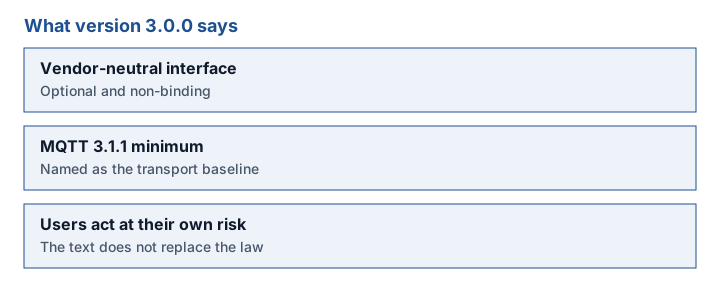
VDA 5050 version 3.0.0, read from the VDA5050 English text, describes a standardized vendor-neutral communication interface between a fleet control system and mobile robots. Its stated purpose is interoperability where several mobile robots run under one fleet control. The text says use is optional and non-binding. It says the statements do not replace the need to review laws and regulations, and that users act at their own risk. It is not a packaging-machine interface and it is not, in that wording, a safety standard for the handoff.
The same document says MQTT is the transport, with MQTT 3.1.1 as the minimum version, and JSON as the payload format. That is a fleet message path. It does not describe a photo-eye on a conveyor or a “case complete” bit on a packer.
Two sheets, not one
Keep a fleet sheet for order, arrival and robot state, using the VDA 5050 terms you actually implement. Keep a separate sheet for the packaging machine: ready to receive, load present, fault, and release. Do not derive the second sheet from the first. A simulated map pin called “dock A” in a workshop file should be labelled hypothetical.
This guide is not in the main menu. Reach related packaging notes from line buffers and handoffs and case and pallet data. The section page is Intralogistics.
Method and sources
The VDA 5050 version 3.0.0 English markdown was read on 14 October 2026. No packaging-machine manual was used, and no robot was observed.