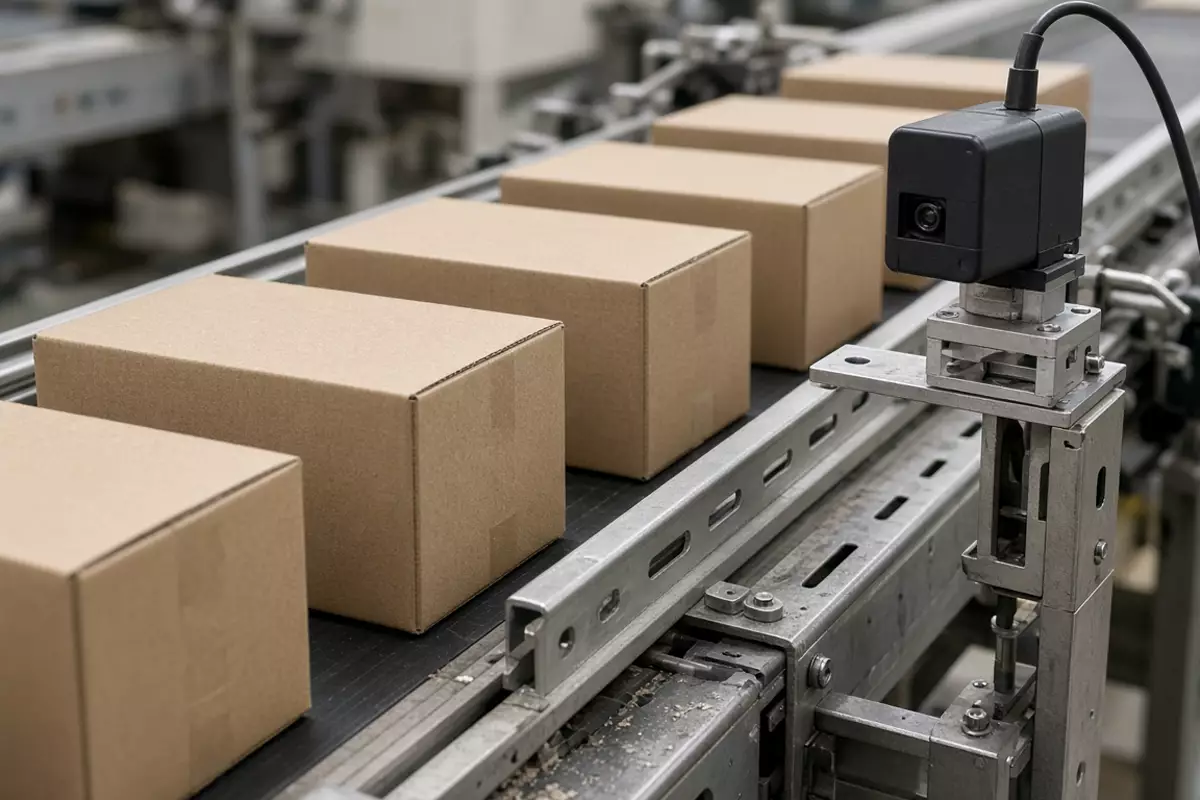
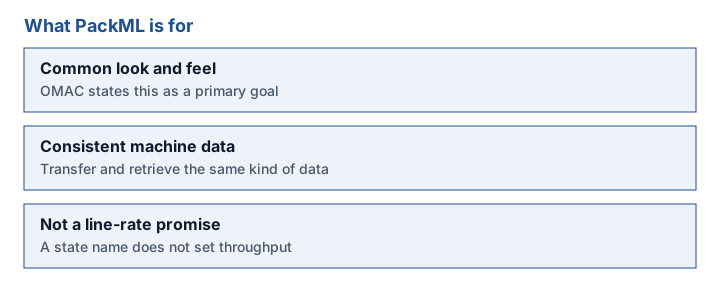
A machine that shows the word Execute is not, by that word alone, ready for your line. PackML is a way to name machine behaviour and machine data so a plant can read them consistently. It is not a measured speed, and it is not the same thing as OPC UA or MQTT.
PackML, as OMAC describes it, is the automation standard meant to make consistent machine data easier to transfer and retrieve. OMAC says it was developed by OMAC and adopted as ISA-TR88.00.02. The stated goals are a common look and feel across a plant floor and room for industry innovation. OMAC also says a person working with a PackML-enabled machine can expect consistent defined behaviours even when machines come from different manufacturers and use different control systems. That is a claim about behaviour names, not a claim that every packaging machine already implements it.
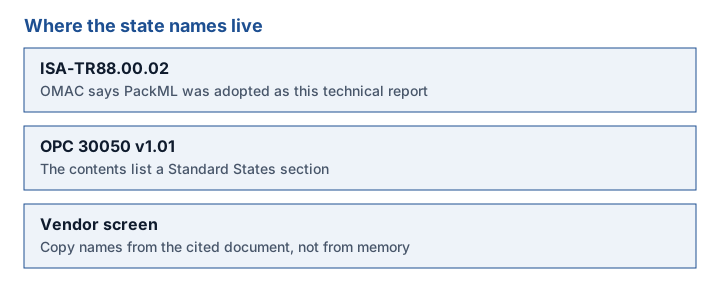
OMAC points readers who want the state model itself to the ISA website for ISA-TR88, and it lists implementation guides from 2015 and 2022. This page does not reproduce those state names. The OPC Foundation companion specification “OPC UA for PackML — Common Object Model”, marked v1.01 on the reference site, has a contents entry called Standard States (section 4.2.5) and another called Standard Modes (section 4.2.4). The same contents list methods named Abort, Clear, Stop, Reset and Start. Use those documents for the names. Do not treat a blog diagram as the specification.
What a state list is not
A state list does not set the line rate. It does not say the machine is safe. It does not mean the machine speaks OPC UA. OPC UA for PackML is a separate information model that represents PackML inside OPC UA. MQTT is a different transport, used for example by VDA 5050 between a fleet controller and mobile robots, and it is not a PackML state.
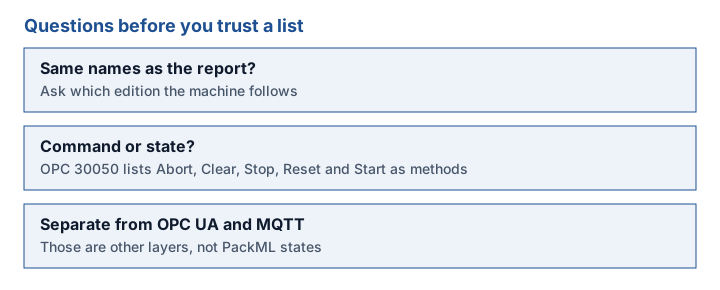
When a supplier says the machine is PackML, ask which document and which year, whether the state names match that document, and which tags are actually populated. OMAC’s benefit list for end users includes consistent tools to track machine performance and easier troubleshooting. Those are aims. They are not a result measured on your line.
A short checklist
| Question | Why it matters |
|---|---|
| Which PackML document and year? | OMAC distinguishes the ISA technical report from later implementation guides. |
| Are modes and states both named? | The OPC companion contents list them as separate sections. |
| Which commands are implemented? | Method names in the companion contents are not proof that a machine exposes them. |
| Is the data simulated? | Any example count on this site is marked simulated. |
When this does not apply
If the machine documents a different state model and does not claim PackML, do not rename its states to match a memory of ISA-TR88. Read the OPC UA packaging data guide for the information-model boundary, and the line buffer guide for why state names do not equal line rate. The section home is Packaging Automation.
Method and sources
OMAC’s PackML page and the OPC Foundation reference contents for OPC 30050 v1.01 were read on 14 October 2026. The ISA report itself was not opened, so state names are not copied here.