A coder can fire and a reader can return a string while the wrong pack continues down the line. The useful record is the chain from trigger to confirmed removal.
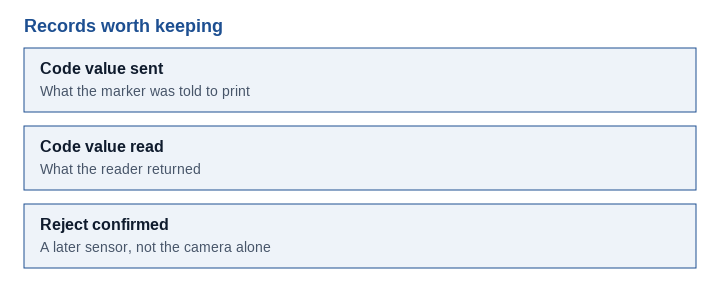
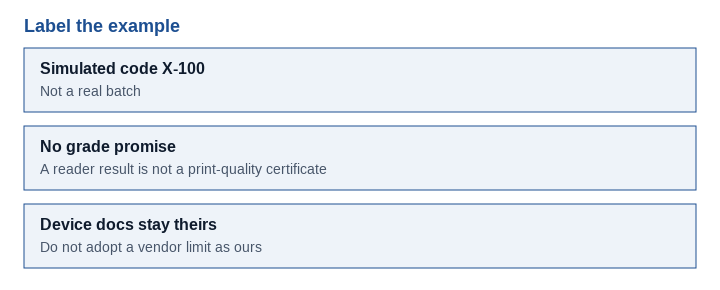
Treat trigger, encode, read, decision, reject confirmation and the stored record as separate steps. Keep a training code such as X-100 in a field of its own, separate from the code the marker sent and the code the reader returned.
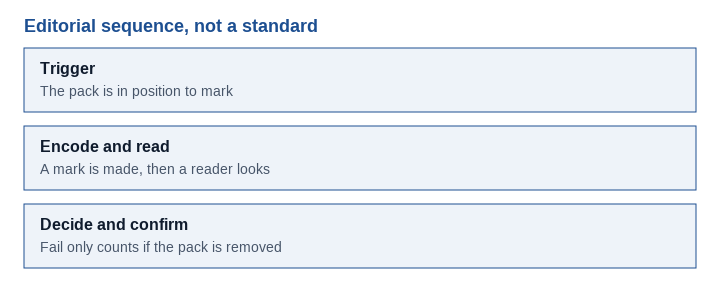
Keep the value sent to the marker and the value returned by the reader as two fields. A match is not yet a removed pack. The reject verification guide uses the same confirm idea.
OMAC’s PackML description covers consistent machine data and state. It does not grade a printed code. If a device manual states a minimum quiet zone or a reader limit, cite that manual and its date. Do not move the number into this site’s voice.
Related handoff notes are in line buffers. The section home is Packaging Automation.
Method and sources
The sequence keeps machine-state language separate from print verification. OMAC’s PackML page is the source for the state names. The coder manual for the station is the source for how that marker encodes and reports a read.