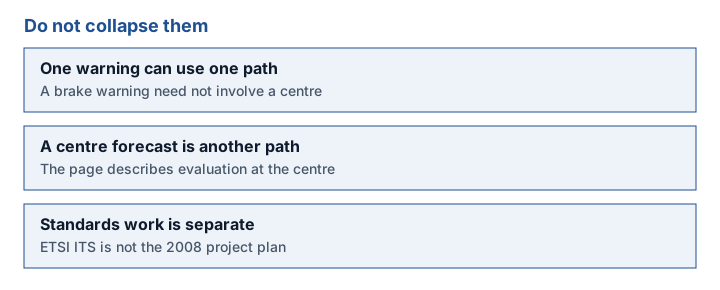
Calling every radio message “connected” hides who must be present for the message to exist. A warning from the car ahead does not need a traffic centre. A forecast that uses many cars’ reports does.
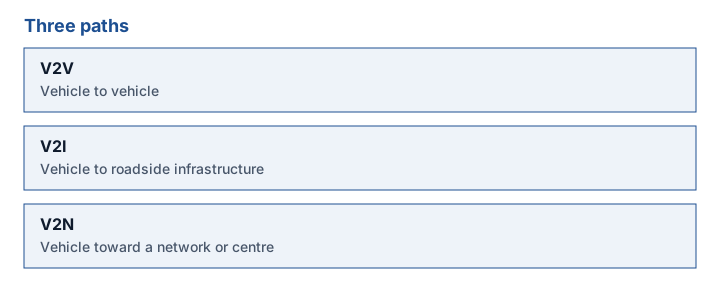
This site uses V2V, V2I and V2N as editorial names for three paths: vehicle to vehicle, vehicle to roadside infrastructure, and vehicle toward a network. The names are for reading. They are not a claim that a standards body uses only these three abbreviations.
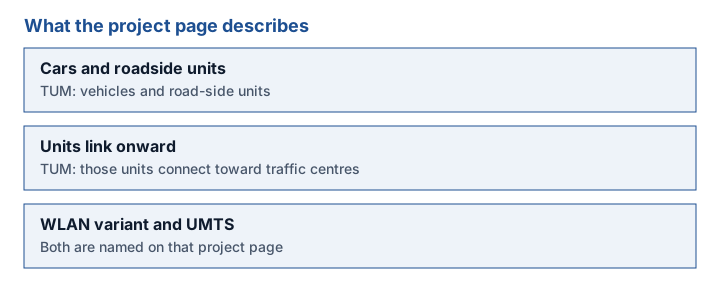
The Technical University of Munich project page for simTD describes communication both between vehicles and with communication units at the roadside, and it says those roadside units connect onward to traffic centres. It names an automotive-oriented WLAN variant and UMTS. That is the project page’s description of the intended system, including future-tense wording about the test area. It is not a 2013 results table. The results press release is cited on the archive overview and in how the information flow is described.
ETSI’s role, from the transport-technologies page, is standards for intelligent transport systems. Do not write that the 2008–2013 project “used today’s ETSI release”. This page did not compare specification versions.
Start with what V2X refers to. The section home is Connected Mobility.
Method and sources
The TUM project page and the ETSI transport-technologies page were read on 14 October 2026. Path names V2V, V2I and V2N are editorial labels on this site.