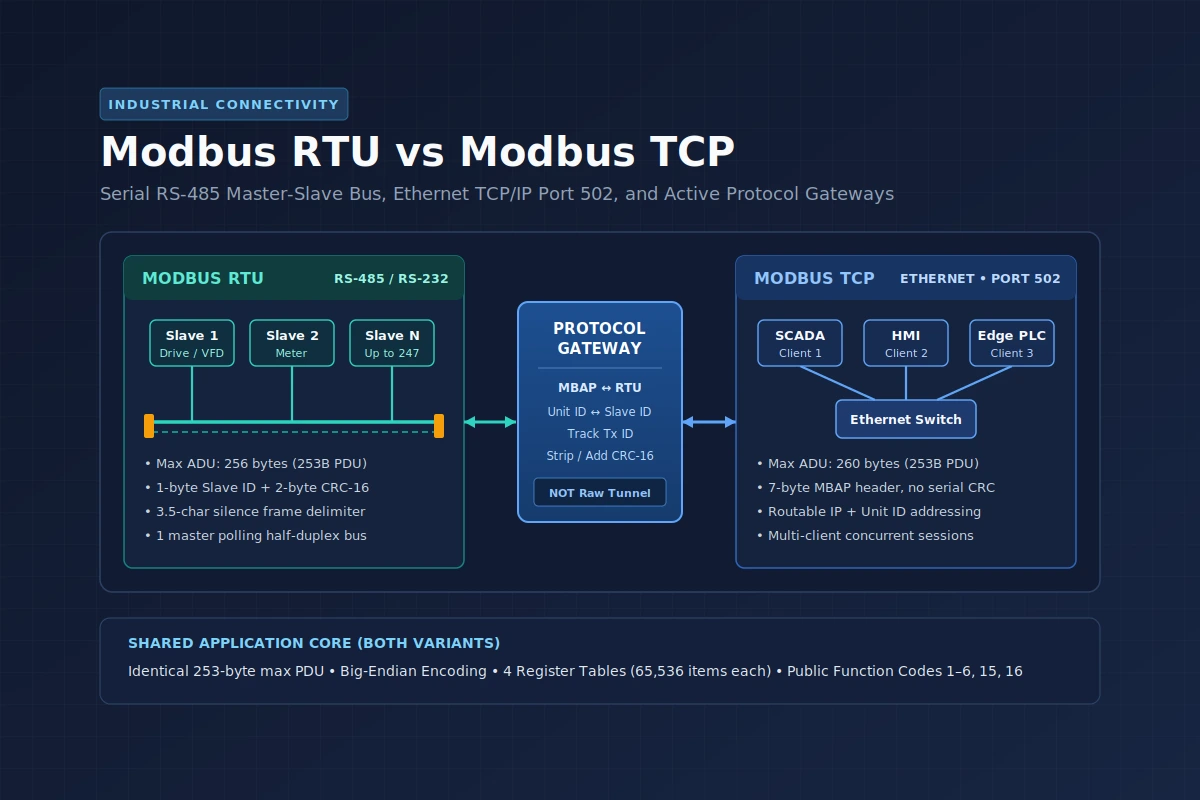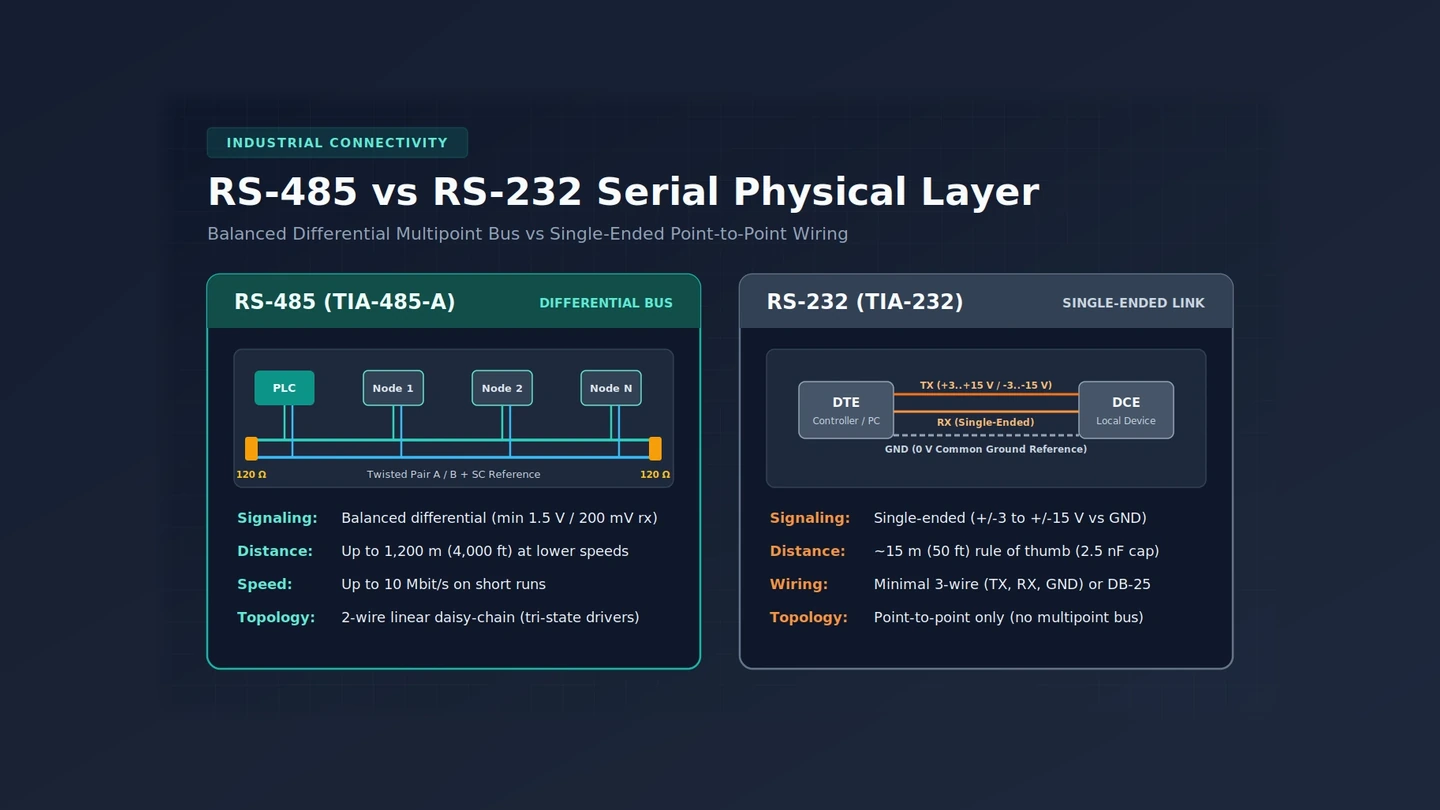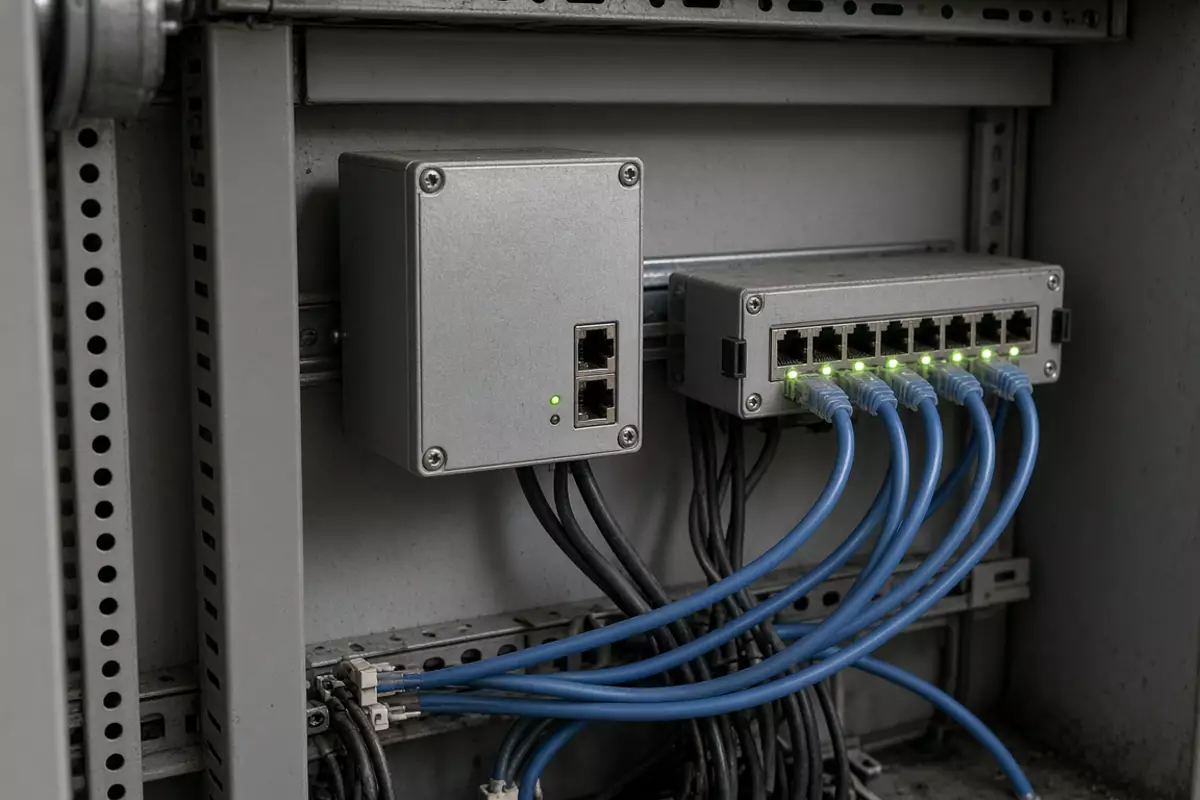
People say “industrial IoT” and then point at a box. A useful map says which box holds the machine signal, which box changes protocol, and which system stores the result.
Use three layers when you read a cabinet: device, gateway and platform. Take the installed names from the cabinet documents.
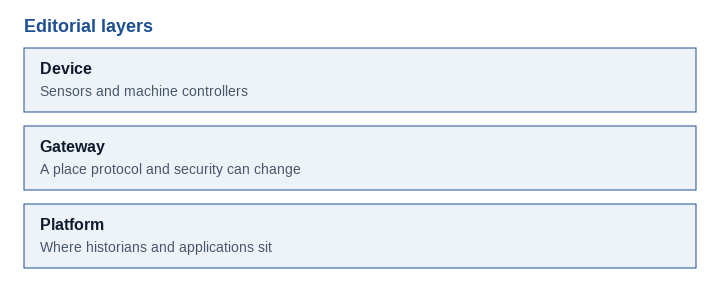
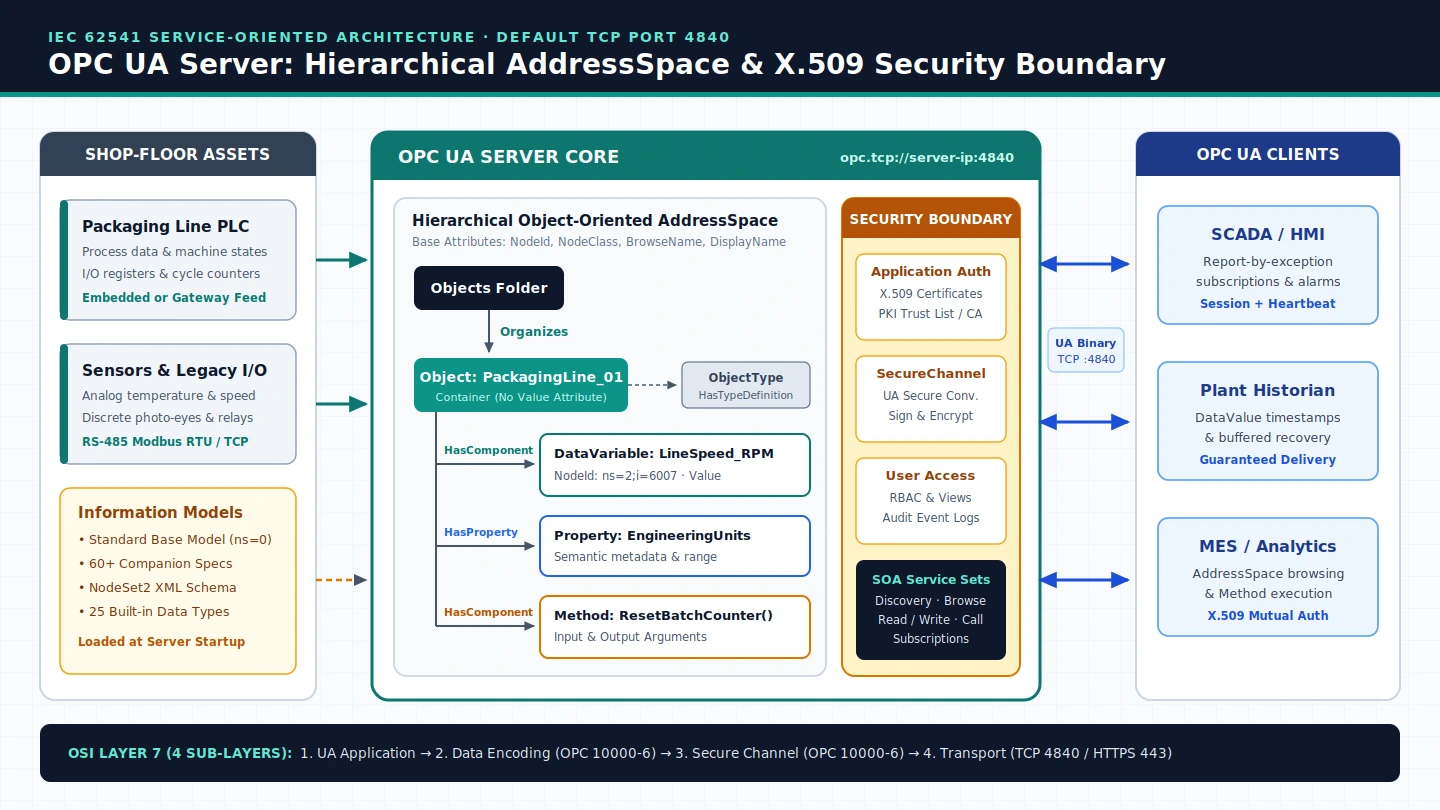
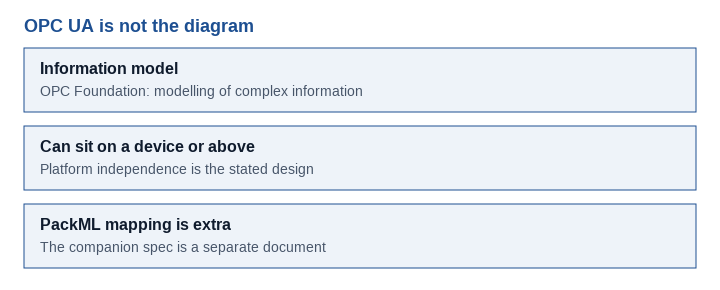
The OPC Foundation describes OPC UA, released in 2008, as platform-independent, from an embedded controller to cloud infrastructure, with information modelling, encryption, authentication and auditing. A packaging information model can use that layer. The PackML companion (OPC 30050 v1.01) is an additional specification, discussed in OPC UA packaging data. Putting OPC UA on the diagram does not mean every device in a plant speaks it.
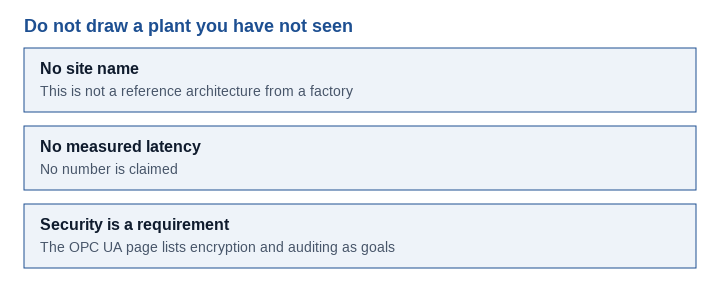
Take the latency, the gateway brand, and the factory name from the cabinet documents. The OPC Foundation lists encryption, authentication and auditing as design goals. Confirm encryption and auditing on the cabinet before you treat them as configured.
Machine-state names stay in the PackML guide. Dual-NIC IEC 62443-3-3 network isolation, local SQLite WAL store-and-forward spool sizing, and high-speed vision offload are detailed in Industrial edge gateway: OPC UA store-and-forward and vision offload. The section home is Industrial Connectivity.
Method and sources
The OPC Foundation OPC UA page and the OPC 30050 contents are the sources for the information-model description. Layer names on a real cabinet come from that cabinet’s documents.